
Kenya Coffee Guide: Everything You Need to Know About Kenyan Green Coffee Beans
Kenya Coffee Guide: Everything You Need to Know About Kenyan Green Coffee Beans
When discussing the world’s finest coffee origins, Kenya consistently ranks among the most respected producers. Although the country contributes only a small percentage of global coffee production, it has earned an exceptional reputation for producing some of the highest-quality Arabica coffees available on the specialty market.
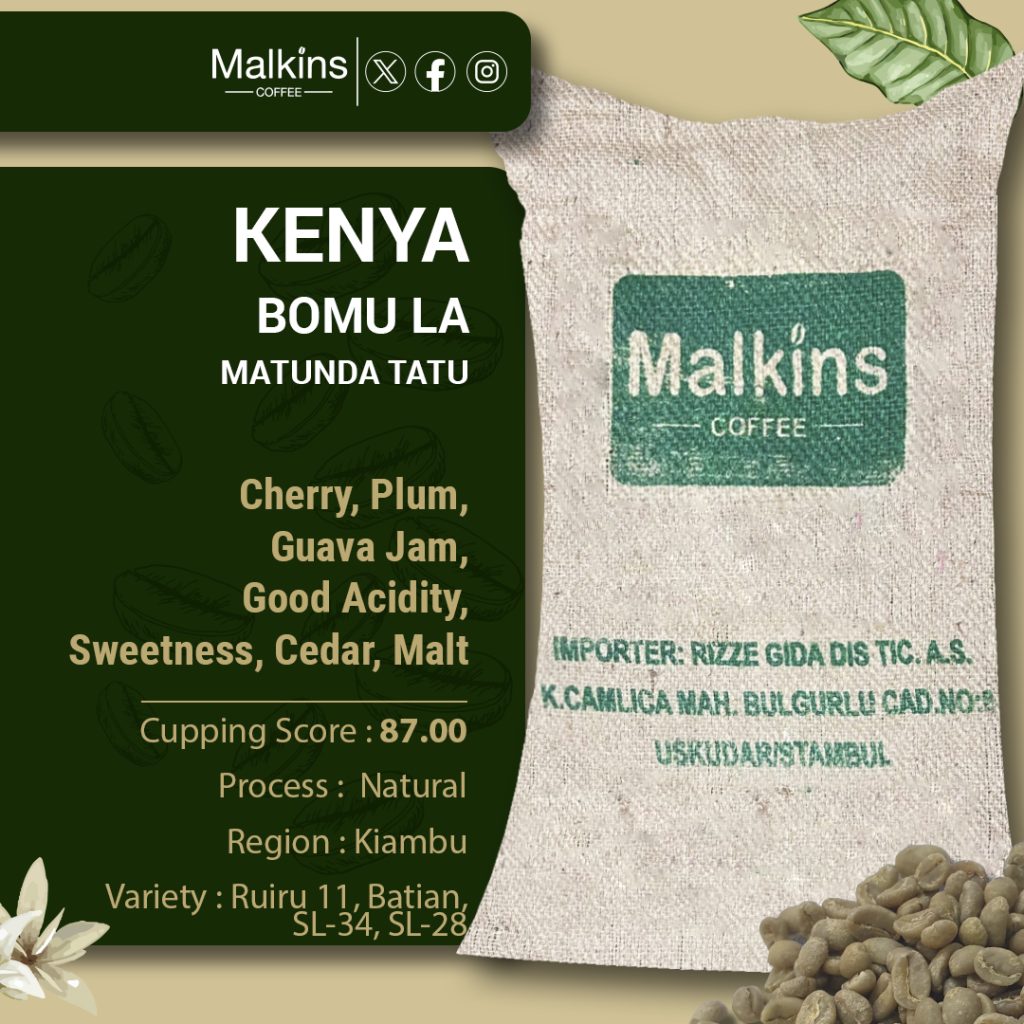
Kenyan coffee is celebrated for its vibrant acidity, remarkable sweetness, layered fruit complexity, and exceptionally clean cup profile. These distinctive characteristics have made Kenyan green coffee beans a preferred choice for specialty coffee roasters, importers, and coffee professionals around the world.
Unlike many coffee-producing countries that compete primarily on production volume, Kenya has built its reputation on quality. Strict grading standards, selective harvesting, fully washed processing methods, and transparent auction systems have established Kenya as one of the benchmark origins for premium green coffee.
At Malkins Coffee, we consider Kenyan coffee not simply as another origin but as one of the world’s most prestigious green coffee sources, offering consistency, traceability, and extraordinary cup quality.
Kenya Coffee at a Glance
| Feature | Details |
| Country | Kenya |
| Continent | Africa |
| Coffee Species | Arabica |
| Main Varieties | SL28, SL34, Batian, Ruiru 11, K7 |
| Growing Altitude | 1,400–2,200 meters |
| Harvest Season | October – January (varies by region) |
| Processing Method | Primarily Fully Washed |
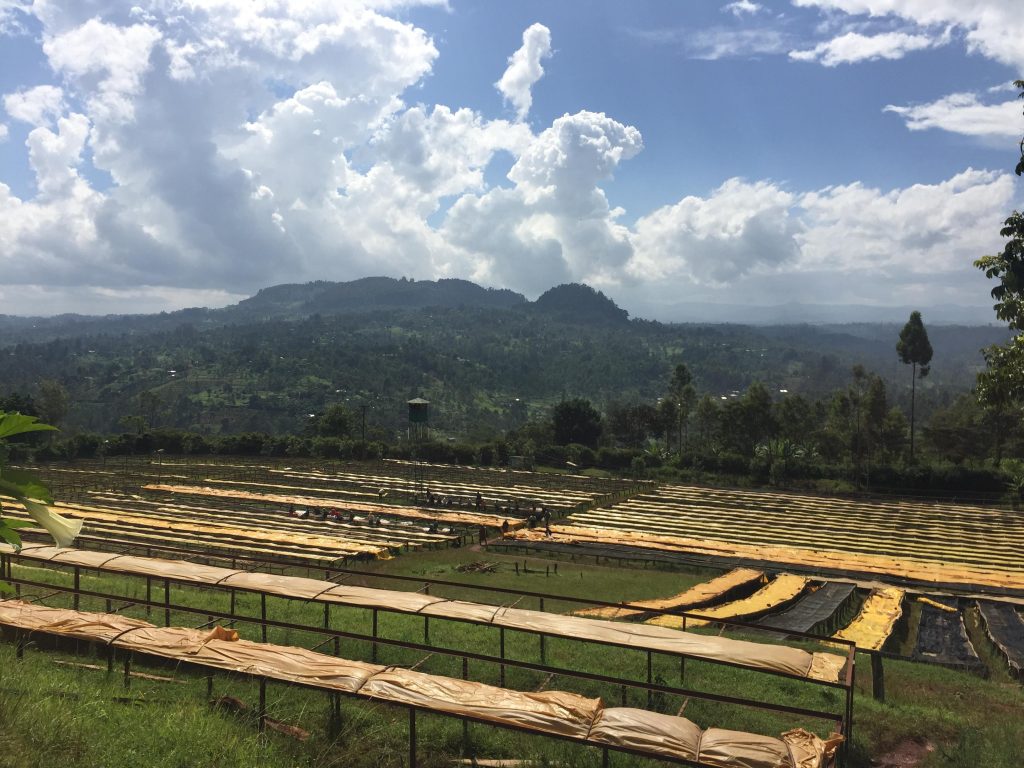
| Drying Method | African Raised Beds |
| Cup Profile | Blackcurrant, citrus, red berries, floral notes |
| Body | Medium to Full |
| Acidity | Bright and Vibrant |
| Specialty Coffee Potential | Exceptional |
The History of Coffee in Kenya
Although coffee originated in East Africa, commercial coffee cultivation in Kenya began relatively late compared to neighboring Ethiopia.
Coffee was introduced during the late 19th century by French missionaries, who planted Bourbon-derived Arabica varieties in the fertile highlands surrounding Nairobi. Over time, coffee cultivation expanded toward Mount Kenya and the country’s central highlands, where volcanic soils and high elevations created ideal growing conditions.
A significant milestone came during the early twentieth century when Scott Agricultural Laboratories (SAL) developed the famous SL28 and SL34 coffee varieties. These cultivars would eventually become synonymous with Kenyan specialty coffee due to their outstanding cup quality and exceptional sweetness.
Today, Kenya’s coffee industry is recognized worldwide for combining scientific agricultural research with traditional quality-focused farming practices.
Why Is Kenyan Coffee So Highly Valued?
Several factors contribute to Kenya’s international reputation as one of the finest coffee-producing countries.
High Elevation
Most Kenyan coffee farms are located between 1,500 and 2,100 meters above sea level.
Higher elevations allow coffee cherries to mature slowly, producing denser beans with increased sugar concentration and more complex organic acids.
This slower maturation contributes directly to Kenya’s signature bright acidity and exceptional sweetness.
Rich Volcanic Soil
Many of Kenya’s coffee-growing regions are located around Mount Kenya and the Great Rift Valley, where volcanic soils are naturally rich in minerals.
These nutrient-rich soils promote healthy coffee trees while enhancing bean density and overall cup complexity.
Ideal Climate
Kenya’s equatorial climate provides consistent daylight hours, moderate temperatures, and reliable rainfall throughout the growing season.
These stable environmental conditions encourage even cherry development and contribute to consistently high-quality harvests.
Fully Washed Processing Excellence
Kenya is internationally recognized for mastering the Fully Washed processing method.
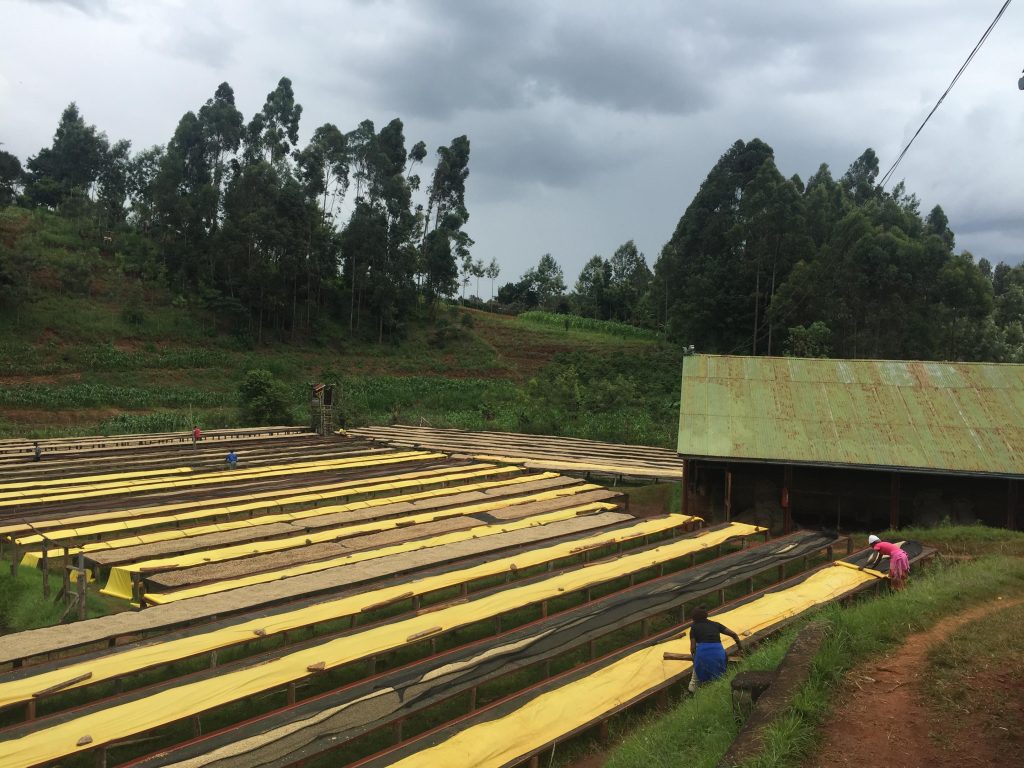
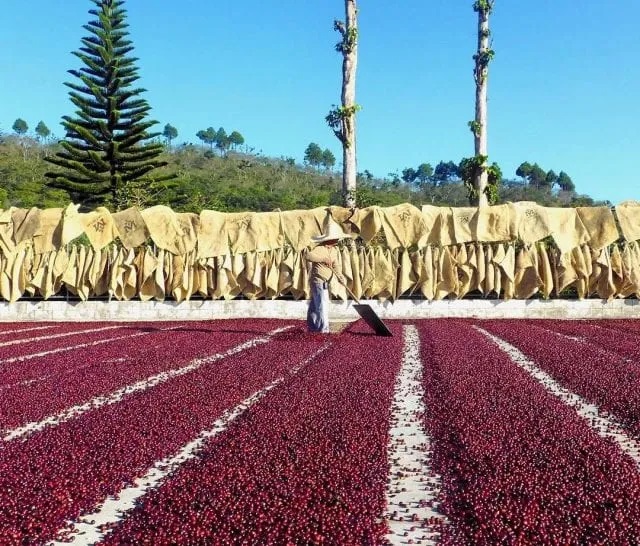
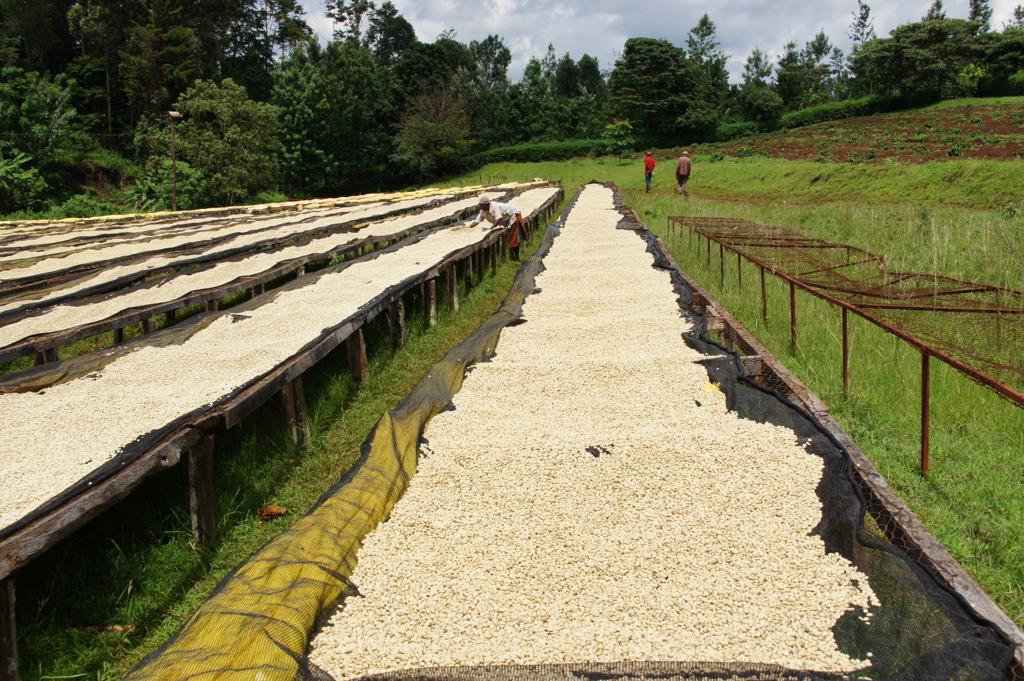
Freshly harvested coffee cherries are carefully sorted, depulped, fermented under controlled conditions, thoroughly washed with clean water, and dried slowly on raised African drying beds.
This meticulous process produces exceptionally clean, vibrant, and transparent cup profiles that highlight the coffee’s natural fruit character.
Kenya’s Coffee Growing Regions
Coffee production is concentrated in Kenya’s fertile central highlands, where altitude, rainfall, and volcanic soils combine to produce outstanding specialty coffees.
| Region | Elevation | Typical Flavor Profile |
| Nyeri | 1,700–2,100 m | Blackcurrant, citrus, floral |
| Kirinyaga | 1,600–2,000 m | Red berries, honey, bright acidity |
| Murang’a | 1,500–1,900 m | Caramel, chocolate, citrus |
| Kiambu | 1,500–1,800 m | Balanced sweetness and body |
| Embu | 1,400–1,900 m | Floral, grape, bergamot |
Among these regions, Nyeri is often regarded as the benchmark for premium Kenyan coffee, consistently producing award-winning lots with exceptional cup scores.
Coffee Varieties Grown in Kenya
Kenya’s remarkable cup quality is closely linked to its carefully selected Arabica varieties.
SL28
Perhaps the most iconic Kenyan coffee variety, SL28 is famous for:
- Outstanding sweetness
- Bright citrus acidity
- Blackcurrant flavor
- Excellent complexity
- High cupping scores
SL34
SL34 offers:
- Rich body
- Red berry sweetness
- Caramel notes
- Balanced acidity
- Long finish
Batian
Batian is a modern variety developed for:
- High productivity
- Disease resistance
- Excellent cup quality
- Climate resilience
Ruiru 11
Ruiru 11 is widely cultivated because of its:
- Resistance to Coffee Berry Disease
- High yields
- Lower production costs
- Improved farm sustainability
K7
K7 performs well in lower-altitude areas and is appreciated for its disease resistance and consistent production.
Kenyan Coffee Grading System
Kenya uses one of the world’s most recognized coffee grading systems based primarily on bean size.
| Grade | Description |
| AA | Largest bean size, highly sought after |
| AB | Most common export grade |
| PB (Peaberry) | Single rounded bean with concentrated flavors |
| C | Smaller beans |
| E | Rare elephant beans (double-sized beans) |
It is important to note that bean size does not automatically determine cup quality. Many Kenya AB and Peaberry coffees achieve outstanding cupping scores.
Processing Methods
The vast majority of Kenyan specialty coffee is processed using the Fully Washed method.
The standard process includes:
- Selective hand harvesting
- Cherry sorting
- Depulping
- Controlled fermentation
- Clean water washing
- Density grading
- Drying on African raised beds
Although Natural, Honey, and Anaerobic processing methods are becoming increasingly popular among experimental producers, washed coffees continue to define Kenya’s international reputation.
Who Should Choose Kenyan Green Coffee?
Kenyan green coffee is an excellent choice for:
- Specialty coffee roasters
- Green coffee importers
- Third-wave coffee shops
- Single-origin coffee programs
- Premium espresso blends
- Filter coffee enthusiasts
Its vibrant acidity and fruit-forward profile perform exceptionally well in pour-over brewing methods such as V60, Chemex, and Kalita Wave.
Conclusion
Kenya has earned its reputation as one of the world’s most prestigious coffee origins through decades of quality-focused production, scientific research, and sustainable farming practices.
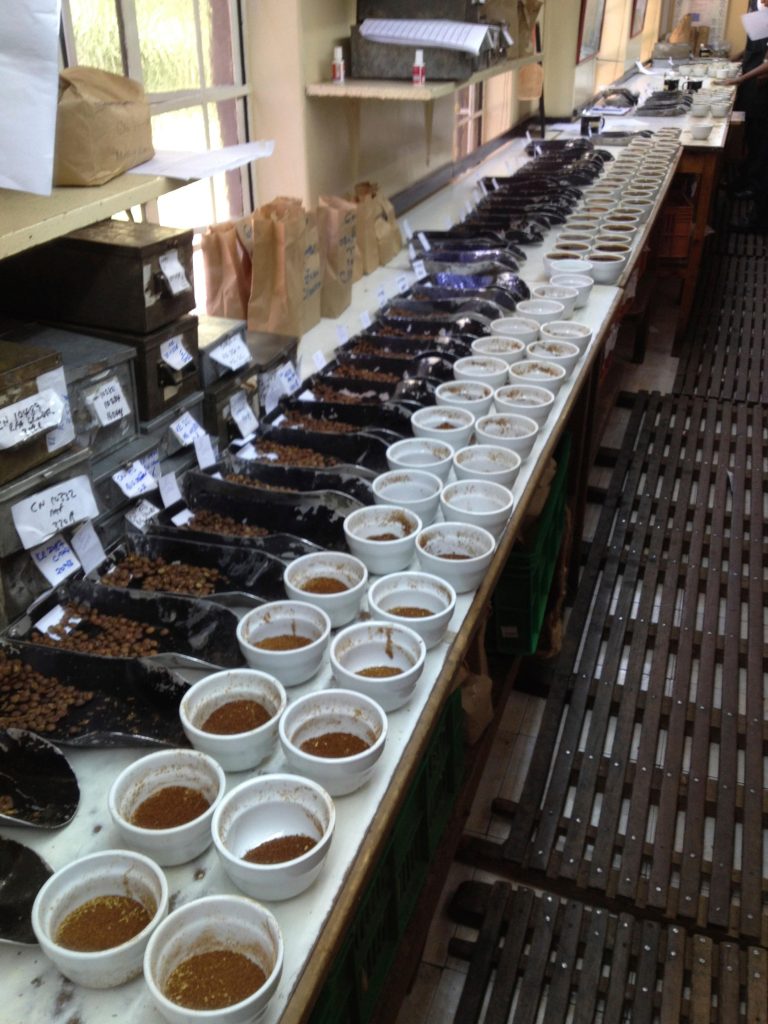
From the legendary SL28 and SL34 varieties to its volcanic soils, high elevations, and meticulous fully washed processing methods, Kenya consistently delivers coffees with remarkable sweetness, vibrant acidity, and extraordinary complexity.
For coffee professionals seeking premium green coffee beans with exceptional traceability and cup quality, Kenyan coffee remains one of the industry’s finest investments.
At Malkins Coffee, we proudly source carefully selected Kenyan green coffee beans that meet the highest standards of specialty coffee, helping roasters and coffee businesses deliver exceptional coffee experiences to their customers.
(FAQ) About Kenyan Coffee
1. Why is Kenyan coffee considered one of the world’s best coffees?
Kenyan coffee is renowned for its exceptional cup quality, vibrant acidity, complex fruit-forward flavors, and meticulous processing methods. High-altitude farms, volcanic soils, and carefully selected Arabica varieties contribute to its international reputation in the specialty coffee industry.
2. What coffee varieties are commonly grown in Kenya?
The most popular coffee varieties grown in Kenya include SL28, SL34, Batian, Ruiru 11, and K7. Among these, SL28 and SL34 are especially prized for their outstanding sweetness, bright acidity, and distinctive blackcurrant flavor profile.
3. What does Kenya AA coffee mean?
Kenya AA refers to the bean size grading system, indicating one of the largest bean sizes produced in Kenya. While AA beans are highly desirable, bean size alone does not determine cup quality. Many Kenya AB and Peaberry coffees also achieve outstanding specialty coffee scores.
4. What does Kenyan coffee taste like?
Kenyan coffee is famous for its bright acidity and complex fruit flavors. Typical tasting notes include blackcurrant, blackberry, raspberry, citrus, grapefruit, red berries, bergamot, floral aromas, honey, caramel, and dark chocolate, often accompanied by a long, clean finish.
5. Which processing method is most common in Kenya?
The vast majority of Kenyan specialty coffees are processed using the Fully Washed (Wet Process) method. This process enhances clarity, sweetness, vibrant acidity, and the distinctive fruit-forward characteristics that define Kenyan coffee.
6. Is Kenyan coffee suitable for espresso?
Yes. Kenyan coffee performs exceptionally well as both a single-origin espresso and as a premium component in espresso blends. Its lively acidity, natural sweetness, and rich complexity create a distinctive and memorable espresso experience.
7. Is Kenyan coffee good for filter brewing?
Absolutely. Kenyan coffees are among the most popular choices for manual brewing methods such as V60, Chemex, Kalita Wave, Origami, and AeroPress. Their clean cup profile and vibrant fruit notes are especially well expressed through filter brewing.
8. When is the coffee harvest season in Kenya?
The main coffee harvest in Kenya typically runs from October to January, although harvesting periods may vary depending on altitude, climate, and individual growing regions. Some areas also experience a smaller secondary harvest during the year.
9. Is Kenyan coffee sustainably produced?
Many Kenyan coffee producers and cooperatives follow sustainable farming practices that focus on environmental conservation, responsible water management, soil health, climate resilience, and improved livelihoods for farming communities. Sustainability has become a key pillar of Kenya’s coffee industry.
10. Who should buy Kenyan green coffee beans?
Kenyan green coffee beans are an excellent choice for specialty coffee roasters, green coffee importers, coffee wholesalers, cafés, coffee chains, and businesses seeking premium single-origin coffees. Their consistent quality, traceability, and exceptional cup profile make them one of the most valuable origins in the global coffee market.