

What Is a Refractometer (Brix Meter)? A Scientific Guide to Measuring Coffee Quality from Farm to Cup
What Is a Refractometer (Brix Meter)? A Scientific Guide to Measuring Coffee Quality from Farm to Cup
Coffee quality is not defined solely by the aromas and flavors found in the cup. The journey of a high-quality coffee begins long before roasting or brewing—it starts on the farm, where coffee cherries develop, mature, and are harvested at the optimal stage. Every step, from cultivation and processing to roasting and brewing, influences the final cup profile.
One of the most valuable tools used throughout this journey is the refractometer.
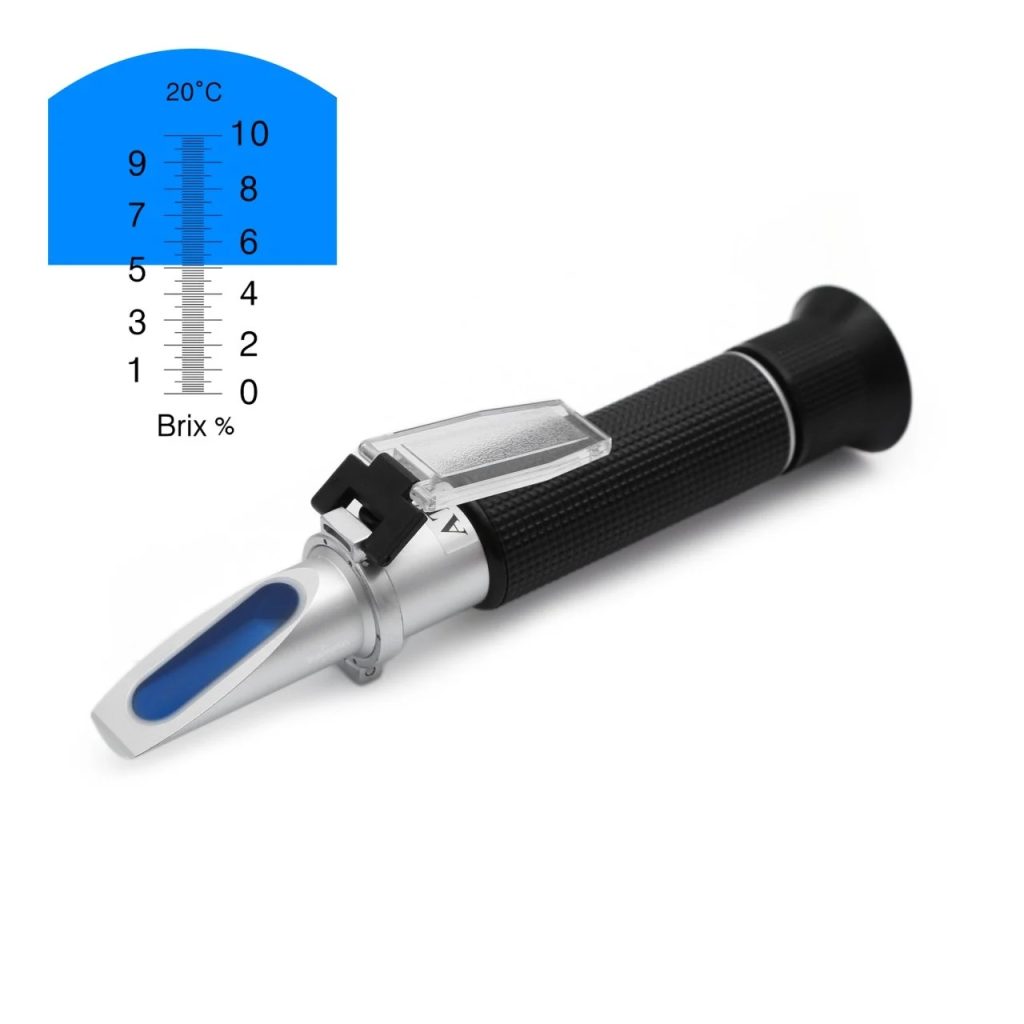
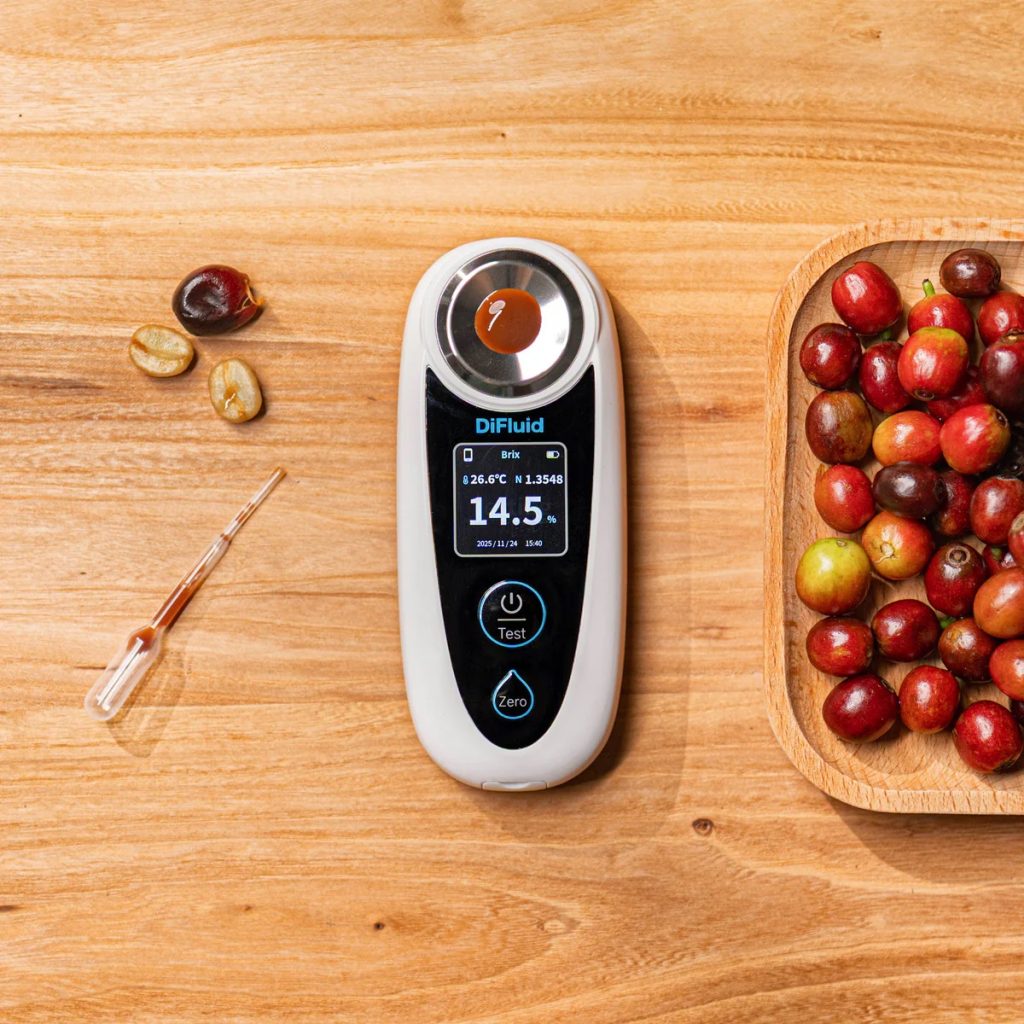
In the coffee industry, refractometers serve two distinct purposes. At the farm level, they are used as Brix meters to measure the sugar concentration of coffee cherries, helping producers determine fruit maturity and optimize harvest timing. Later, during roasting and brewing, coffee refractometers measure Total Dissolved Solids (TDS) to evaluate extraction efficiency and brewing consistency.
Although both applications rely on the same scientific principle, they measure different quality parameters. This makes the refractometer an essential quality control instrument throughout the coffee value chain—from farm to cup.
What Is a Refractometer?
A refractometer is a precision optical instrument that measures the concentration of dissolved substances in a liquid by analyzing how light bends, or refracts, as it passes through the sample.
In coffee production, refractometers are used for different purposes depending on the stage of the production process.
| Application | Parameter Measured | Primary Purpose |
| Coffee Farms | Brix (°Bx) | Evaluate cherry maturity and sugar concentration |
| Processing Stations | Brix (°Bx) | Monitor fermentation progress |
| Roasting & Brewing | TDS (%) | Measure extraction performance and brew consistency |
For this reason, referring to a refractometer only as a brewing tool overlooks its critical role in coffee production.
What Does the Brix Value Mean in Coffee?
The Brix value (°Bx) represents the concentration of dissolved sugars present in the juice of a coffee cherry.
As coffee cherries mature, photosynthesis allows the plant to accumulate carbohydrates that are converted into sugars such as sucrose, glucose, and fructose. Measuring these sugars provides valuable insight into the physiological maturity of the fruit.
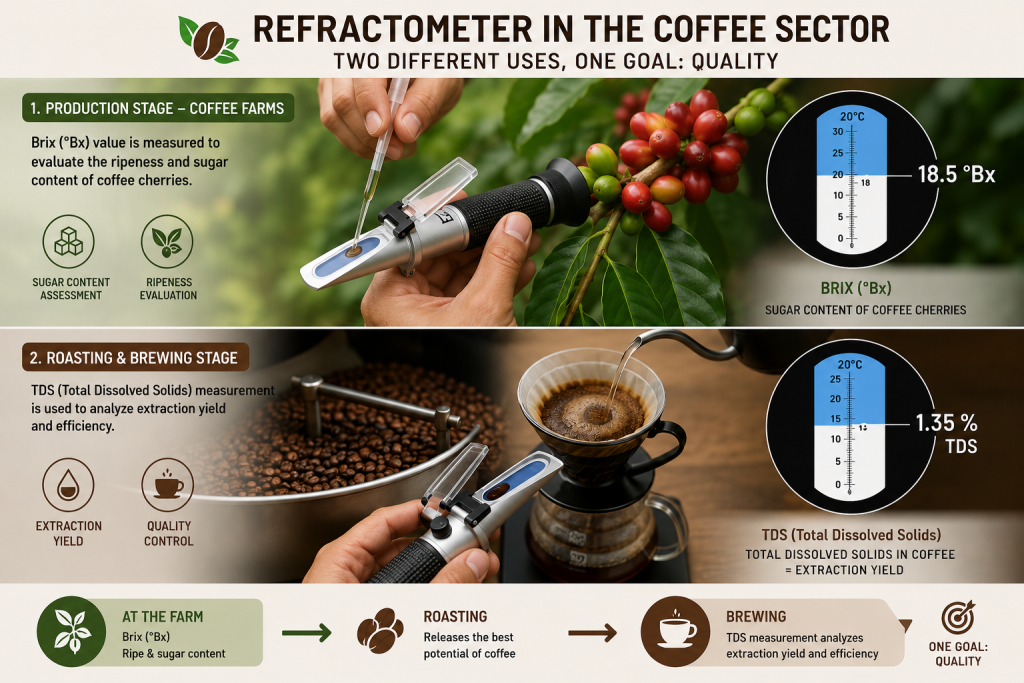
A refractometer enables producers to evaluate this maturity quickly and objectively.
However, it is important to understand that a higher Brix value does not automatically guarantee a better coffee. Variety, altitude, climate, soil composition, agricultural practices, harvesting methods, and post-harvest processing all influence the final cup quality. Brix should therefore be considered one important quality indicator rather than a standalone grading system.
Why Are Refractometers Used on Coffee Farms?
Determining the ideal harvest time is one of the most important decisions a coffee producer makes each season.
Traditionally, producers relied on visual indicators such as cherry color and appearance. Today, many specialty coffee farms complement these observations with Brix measurements to make more informed harvesting decisions.
Coffee cherries collected from different trees, elevations, or plots are gently pressed to extract juice, which is then analyzed using a refractometer. This allows producers to compare maturity levels objectively instead of relying solely on visual inspection.
For specialty coffee producers, this scientific approach contributes to greater consistency and better lot selection.
The Relationship Between Brix and Coffee Quality
The sugar concentration inside a coffee cherry plays an important role in post-harvest processing.
Cherries with higher sugar content may provide several advantages:
- Support more stable fermentation processes.
- Provide microorganisms with a richer source of fermentable sugars.
- Contribute to the development of more complex aroma precursors.
- Enhance the perception of sweetness in the final cup.
- Help achieve cleaner and more balanced flavor profiles.
Nevertheless, Brix is only one piece of the quality puzzle. Proper harvesting, fermentation, drying, storage, roasting, and brewing remain equally important in determining the final sensory experience.
Typical Coffee Cherry Brix Values
| Coffee Cherry Stage | Approximate Brix (°Bx) |
| Unripe | 8–12 |
| Ripening | 12–16 |
| Fully Ripe | 18–24 |
| Exceptional Specialty Lots | 24–30+ |
These values vary depending on coffee species, variety, altitude, climate, nutrition, and growing conditions.
Monitoring Fermentation with a Refractometer
A refractometer continues to be valuable after harvest, particularly during coffee processing.
In processing methods such as Natural, Honey, Anaerobic Fermentation, and Carbonic Maceration, microorganisms consume the sugars naturally present in the coffee fruit.
As fermentation progresses, Brix readings gradually decrease.
Monitoring these changes helps producers:
- Track fermentation activity.
- Compare processing batches.
- Optimize fermentation duration.
- Reduce the risk of over-fermentation.
For experimental and specialty coffee processing, refractometers are commonly used alongside pH meters and temperature monitoring systems to improve process consistency.
Why Are Brix Measurements Important for Green Coffee Buyers?
Modern specialty coffee emphasizes transparency and traceability throughout the supply chain.
Many producers and exporters now include processing data alongside lot information, and Brix measurements may be part of this documentation.
While Brix values alone cannot determine coffee quality, they provide valuable insights into:
- Harvest maturity.
- Processing discipline.
- Fermentation management.
- Farm-level quality control.
- Overall traceability.
For green coffee importers and roasters, these data contribute to a more comprehensive understanding of a coffee’s production history before cupping even begins.
Using Refractometers During Brewing
The second major application of refractometers takes place after roasting.
Instead of measuring Brix, brewing refractometers measure Total Dissolved Solids (TDS)—the percentage of soluble coffee compounds extracted into the beverage.
TDS measurements allow coffee professionals to evaluate brewing variables such as:
- Grind size
- Water temperature
- Brewing time
- Coffee-to-water ratio
These measurements also make it possible to calculate Extraction Yield, helping baristas optimize recipes and improve consistency.
Brix vs. TDS: What’s the Difference?
| Feature | Brix | TDS |
| Application | Coffee Cherries | Brewed Coffee |
| Measures | Dissolved Sugars | Dissolved Coffee Solubles |
| Primary Purpose | Harvest & Fermentation Management | Brewing Performance Evaluation |
| Main Users | Coffee Producers & Processing Stations | Roasters, Baristas & Quality Control Teams |
Although both measurements rely on refractometry, they evaluate entirely different stages of coffee production and should not be confused.
The Malkins Coffee Perspective
At Malkins Coffee, we believe exceptional coffee begins long before roasting.
Quality starts with properly ripened coffee cherries, carefully managed harvesting practices, controlled fermentation, responsible drying, and scientific quality control throughout every stage of production.
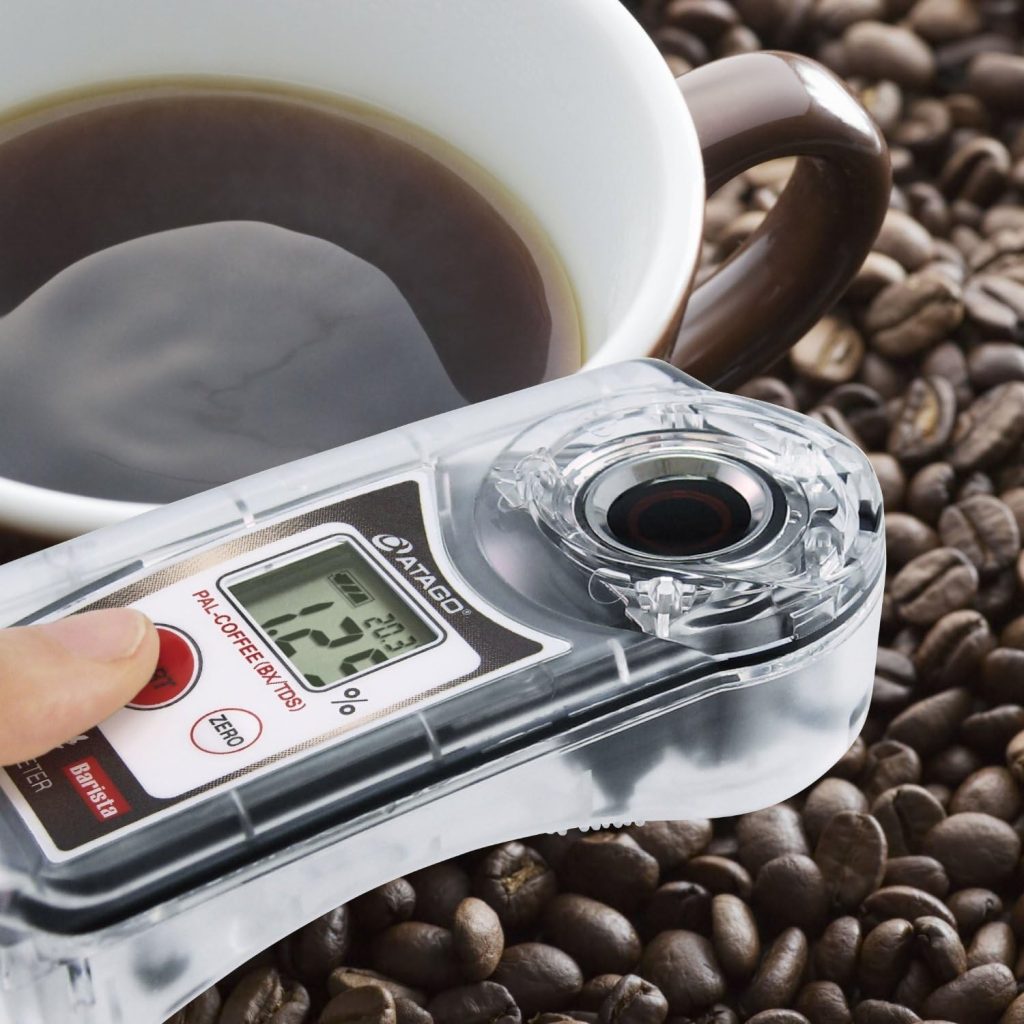
A refractometer is one of the tools that enables producers, exporters, green coffee buyers, roasters, and baristas to make objective, data-driven decisions. When combined with cupping evaluations, moisture analysis, water activity measurements, density testing, and defect assessment, refractometer readings become part of a comprehensive quality management system.
Scientific measurements should support sensory evaluation—not replace it. Together, they help reveal the true potential of every coffee.
Conclusion
A refractometer is far more than a brewing accessory. It is a versatile quality control instrument used throughout the coffee supply chain—from evaluating coffee cherry maturity and monitoring fermentation to measuring brewing performance through TDS analysis.
As data-driven quality management becomes increasingly important in specialty coffee, Brix and TDS measurements help producers, importers, roasters, and baristas make more informed decisions while improving consistency across every stage of production.
When combined with professional sensory evaluation and responsible processing practices, refractometer analysis contributes to producing coffees that truly express their origin, craftsmanship, and full flavor potential.
Frequently Asked Questions (FAQ)
1. What is a refractometer, and how is it used in the coffee industry?
A refractometer is a precision instrument that measures the concentration of dissolved substances in a liquid by analyzing light refraction. In the coffee industry, it is used to measure the Brix value of coffee cherries during production and the Total Dissolved Solids (TDS) of brewed coffee during quality control and recipe development.
2. What does the Brix value indicate in coffee cherries?
The Brix value measures the concentration of dissolved sugars in coffee cherry juice. It is commonly used to assess fruit maturity, support harvest decisions, and monitor coffee processing. While higher Brix levels often indicate riper cherries, they should always be evaluated alongside other quality indicators.
3. Does a higher Brix value mean better coffee quality?
Not necessarily. Although a higher Brix value generally reflects greater sugar concentration, coffee quality also depends on factors such as variety, altitude, soil conditions, climate, harvesting practices, fermentation, drying, roasting, and sensory characteristics. Brix is an important indicator but not a standalone quality measurement.
4. Why do coffee producers use refractometers on coffee farms?
Coffee producers use refractometers to measure the sugar content of coffee cherries before harvest. These measurements help determine the optimal harvest window, improve lot consistency, and support more informed decisions during coffee production.
5. How is a refractometer used during coffee fermentation?
During processing methods such as Natural, Honey, Anaerobic Fermentation, and Carbonic Maceration, refractometers monitor changes in sugar concentration. Tracking Brix values helps producers evaluate fermentation progress, improve process consistency, and reduce the risk of over-fermentation.
6. What is the difference between Brix and TDS in coffee?
Brix measures the concentration of dissolved sugars in fresh coffee cherries, while TDS (Total Dissolved Solids) measures the concentration of dissolved coffee compounds in brewed coffee. Although both measurements use refractometry, they evaluate different stages of coffee production.
7. Are refractometers used during coffee roasting?
Not directly. Refractometers are typically used after roasting by measuring the TDS of brewed coffee. These data help roasters evaluate roast profiles, compare brewing performance, and optimize extraction.
8. Why are Brix measurements important when buying green coffee?
Brix measurements provide valuable information about harvest maturity, processing practices, and farm-level quality management. When combined with cupping results and other quality metrics, they help green coffee buyers better understand the production history and potential of a coffee lot.
9. Can a refractometer determine coffee quality on its own?
No. A refractometer is an important quality control tool, but it cannot replace professional sensory evaluation. The most accurate assessment combines refractometer data with cupping scores, moisture content, water activity, density measurements, defect analysis, and overall processing quality.
10. Why is refractometer analysis important in specialty coffee?
Specialty coffee focuses on consistency, traceability, and quality at every stage of production. Refractometer analysis provides objective data that help producers, processors, roasters, and baristas make informed decisions, improve process control, and consistently deliver high-quality coffee.