


What Is the Coffee Plant? Coffea Arabica Botany, Cultivation and the Production of High-Quality Coffee Beans
What Is the Coffee Plant? Coffea Arabica Botany, Cultivation and the Production of High-Quality Coffee Beans
Coffee is often discussed through roasted beans, flavor profiles, roasting curves and cup quality. Yet the story of a high-quality coffee begins much earlier than the roasting machine.
It begins with the coffee plant.
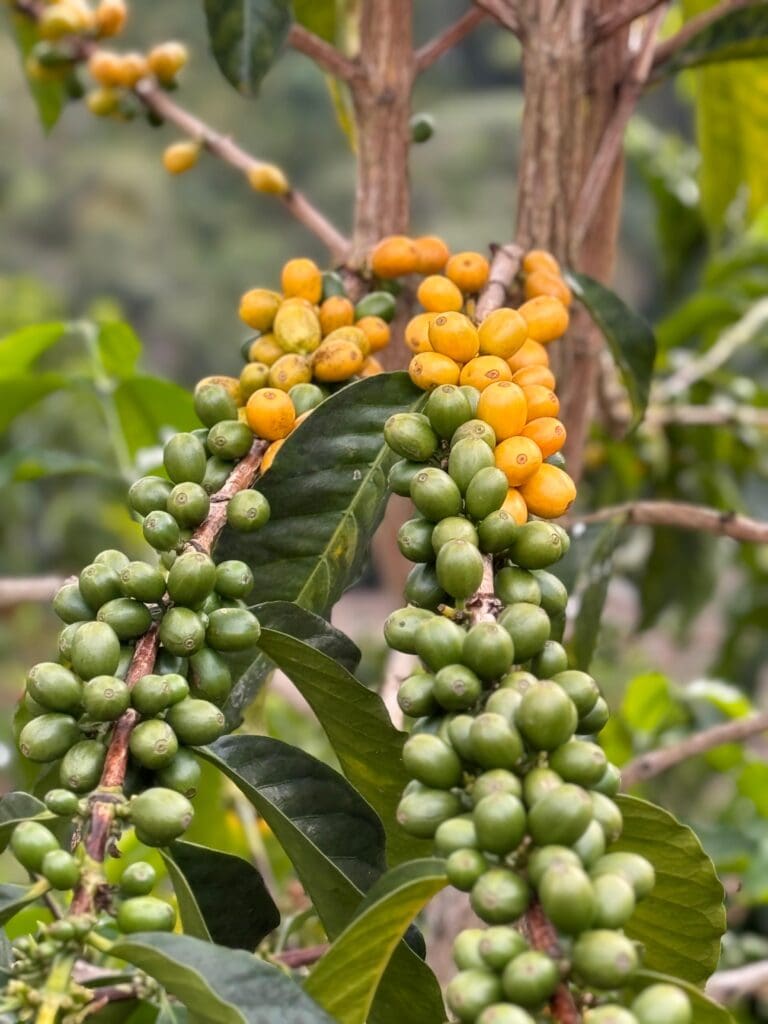
A young coffee plant develops its root system, produces new branches and leaves, flowers, and eventually produces coffee cherries. Inside these cherries are the seeds that, after harvesting, processing, drying and storage, become what the coffee industry knows as green coffee.
For this reason, the acidity, sweetness, body, aroma and aftertaste we experience in the cup cannot be explained by roasting alone.
Coffee quality begins to develop at the plant level.
Genetics, variety, altitude, temperature, rainfall, soil, sunlight, shade, microclimate, plant health, harvesting maturity and processing all interact throughout the production chain.
Understanding high-quality Arabica therefore starts with understanding the coffee plant itself.
What Is Coffea Arabica?
Coffee plants belong to the Rubiaceae family and the Coffea genus. Although several Coffea species exist, two species dominate commercial coffee production:
- Coffea arabica
- Coffea canephora
The second is commonly known as Robusta.
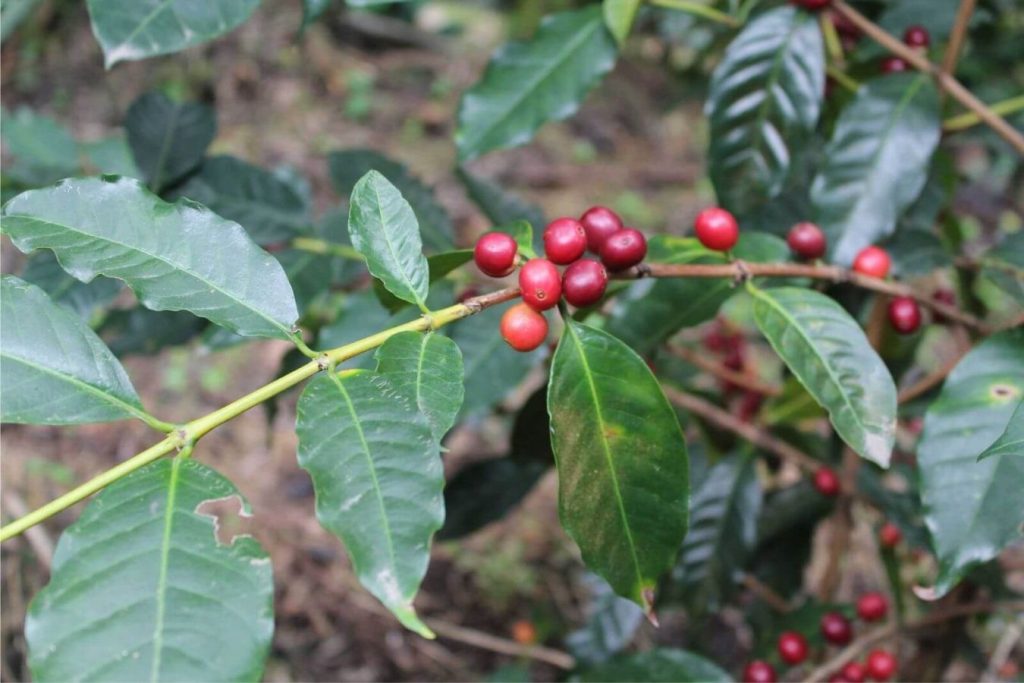
Coffea arabica L., commonly referred to as Arabica, has a particularly important position in the specialty coffee industry because, under suitable genetic and environmental conditions, it can produce highly complex aromatic profiles and exceptional cup quality.
However, an important distinction should be made:
Arabica is a species, not a variety.
Bourbon, Typica, Caturra, SL28, Gesha and Pacamara, for example, represent different varieties, selections or genetic materials within Coffea arabica.

This distinction becomes particularly important when evaluating or purchasing green coffee.
Knowing that a coffee is simply “Arabica” provides only limited information. A professional evaluation should also consider its variety, country of origin, production region, altitude, climate, soil conditions, harvest period and processing method.
The Botanical Structure of the Coffee Plant
Coffea arabica is a perennial, evergreen plant that can develop as a shrub or small tree under natural conditions.
In commercial production, however, coffee plants are pruned and shaped to maintain manageable plant height, improve harvesting efficiency and encourage productive branches.
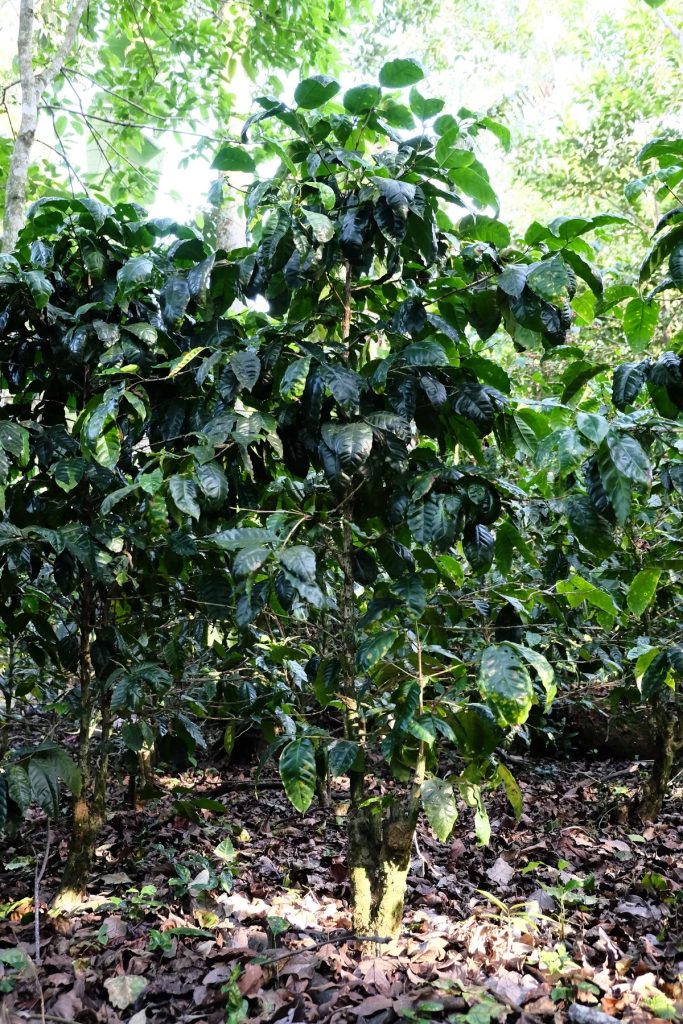
This highlights an important principle in coffee cultivation:
Growing coffee is not simply about allowing the plant to grow. It is about managing how the plant grows.
The root system, trunk, primary branches, secondary branches, leaves, flowers and cherries are all interconnected.
The health and development of one part of the plant can directly influence the performance of another.
| Plant structure | Main function | Importance in coffee production |
| Root system | Water and nutrient uptake | Plant health and development |
| Trunk | Supports the plant structure | Supports branch development |
| Primary branches | Main productive framework | Supports fruit-bearing branches |
| Secondary branches | Supports flowering and fruit development | Important for productivity |
| Leaves | Photosynthesis | Energy and carbon production |
| Flowers | Reproduction | Beginning of fruit formation |
| Fruit | Contains the seeds | Source of green coffee |
| Seed | Carries genetic material | Becomes green coffee after processing |
The balance between the root system, leaves and productive branches is particularly important.
A coffee plant must produce fruit while maintaining enough vegetative growth to remain healthy and productive over time.
Roots, Soil and Plant Health
The root system is fundamental to coffee production.
Roots anchor the plant and provide access to water and mineral nutrients. They also influence how the plant responds to periods of drought and environmental stress.
For this reason, productive coffee soil should not be evaluated simply by its nutrient content.
Good coffee-growing soils also require:
- adequate drainage,
- sufficient aeration,
- balanced moisture,
- organic matter,
- suitable pH,
- healthy biological activity.
Continuous waterlogging can reduce oxygen availability around the roots and increase the risk of root-related problems.
On the other hand, excessively dry soil can create water stress.
The objective is therefore not to keep the soil constantly wet, but to maintain a balanced root-zone environment where water and oxygen remain available to the plant.
Branches, Leaves and the Productive Structure
The productive capacity of a coffee plant is closely connected to its branching structure.

Primary branches produce secondary and smaller productive branches, where flowers and eventually coffee cherries develop.
Pruning is therefore much more than simply reducing the height of the plant.
Proper pruning can help:
- improve light penetration,
- maintain air circulation,
- stimulate new productive growth,
- maintain a balanced canopy,
- improve harvesting efficiency.
Excessive or poorly managed pruning, however, can reduce the plant’s productive capacity.
Leaves are equally important because they are among the plant’s main centers of photosynthesis.
Through photosynthesis, the plant converts light energy into chemical energy that supports growth, tissue formation and fruit development.

Diseases affecting the leaves, such as coffee leaf rust, can reduce photosynthetic capacity and ultimately affect plant productivity.
Healthy coffee production therefore begins with a healthy plant, not simply a healthy cherry.
Coffee Flowers and Fruit Development
Coffee flowers are generally white and highly fragrant. Flowering marks one of the most important stages of the coffee production cycle because successful pollination is followed by fruit development.
The flowering pattern of coffee is strongly influenced by environmental conditions, including:
- rainfall,
- dry periods,
- temperature,
- daily temperature variation,
- soil moisture.
In many coffee-growing regions, a distinct dry period followed by rainfall can trigger relatively synchronized flowering.
This means that rainfall is important not only in terms of total annual precipitation but also in terms of when the rainfall occurs.
After successful flowering, the coffee fruit begins to develop.
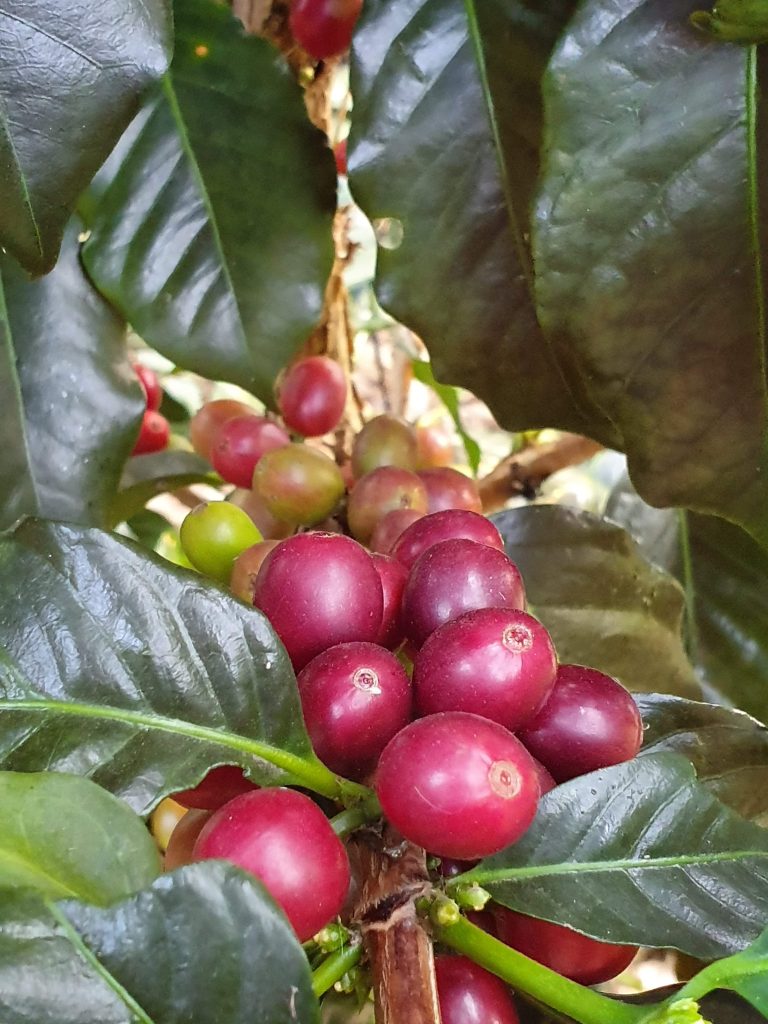
The fruit is commonly called a coffee cherry.
Unripe cherries are generally green, while mature cherries may become red, yellow or orange depending on the variety.
Fruit color is one of the practical indicators used during harvesting to determine maturity.
The Seed Inside the Coffee Cherry
The coffee cherry contains several layers surrounding the seeds.
| Coffee cherry structure | Common terminology | Main role |
| Outer skin | Exocarp / skin | Protects the fruit |
| Fruit pulp | Pulp / mesocarp | Contains water and soluble compounds |
| Mucilage | Mucilage | Rich in sugars and pectins |
| Parchment | Parchment / endocarp | Protective layer around the seed |
| Silver skin | Silverskin | Thin layer surrounding the seed |
| Seed | Coffee seed | Becomes green coffee after processing |
The mucilage is particularly important in post-harvest processing.
Natural, Washed and Honey processes differ partly in how much of the fruit and mucilage remains in contact with the seed during processing.
Processing therefore does much more than separate the seed from the fruit.
It can also influence the chemical composition and sensory development of the coffee.
Why Genetics Matter in Arabica Coffee
One of the most important characteristics of Coffea arabica is its ability to self-fertilize.
Arabica has 44 chromosomes (2n = 44) and an allotetraploid genetic structure. Its genetic background is associated with two ancestral Coffea genomes, contributing to its distinctive biological and genetic characteristics.
This genetic structure is one reason Arabica should be understood as a distinct coffee species rather than simply as a generic category of coffee.
Genetics can influence:
- cup quality potential,
- aroma development,
- caffeine and other chemical compounds,
- fruit development,
- maturation period,
- yield,
- plant architecture,
- disease resistance,
- environmental adaptation.
However, genetic potential does not automatically become cup quality.
The same genetic material can perform differently under different environmental conditions.
This is why the interaction between genotype and environment is so important in coffee production.
Arabica Varieties and Their Importance
Choosing a coffee variety is a long-term agricultural decision.
Coffee plants may remain productive on the same farm for many years, so variety selection must consider more than cup quality alone.
| Factor | Why it matters |
| Cup quality | Specialty coffee potential |
| Yield | Economic sustainability |
| Plant height | Harvesting and farm management |
| Maturation period | Harvest planning |
| Disease resistance | Production security |
| Drought tolerance | Climate resilience |
| Altitude adaptation | Suitability for the growing area |
| Shade tolerance | Compatibility with agroforestry |
| Nutrient requirements | Fertility management |
| Fruit characteristics | Harvest and processing management |
There is therefore no universally “best” Arabica variety.
The more useful question is:
Which Arabica variety is best suited to a particular production environment?
Climate, Altitude and Microclimate
Arabica is generally cultivated in tropical and subtropical regions. However, not every tropical environment is equally suitable for high-quality Arabica production.
Temperature, rainfall, humidity, altitude and local microclimate all influence plant development.
Arabica is particularly sensitive to excessive heat and water stress. High temperatures can accelerate plant development, affect flowering and fruit maturation, and increase environmental stress.
Altitude is frequently used as an indicator of coffee quality because higher elevations are generally associated with lower temperatures.
Cooler conditions can slow fruit development and influence the accumulation of sugars and other compounds associated with coffee quality.
However:
High altitude does not automatically mean high-quality coffee.
A better way to understand the relationship is:
Altitude + temperature + variety + sunlight + water availability + soil + farm management + processing
together influence the final result.
Microclimate can be equally important. Two farms at similar elevations may produce very different coffees because of differences in slope orientation, shade, wind exposure, rainfall patterns and local temperature.
This is one of the reasons coffee origin should be understood at a more detailed geographical level than country alone.
Rainfall and Water Management
Coffee requires water for healthy development, but the amount of rainfall alone does not determine productivity or quality.
The following factors are important:
- total rainfall,
- seasonal distribution,
- timing,
- intensity,
- duration.
Prolonged drought can create water stress, while excessive rainfall during harvest can damage cherries, increase disease pressure and make drying more difficult.
The distribution of rainfall throughout the production cycle can therefore be more informative than annual precipitation alone.
Sunlight and Shade Management
Coffee has a natural ecological relationship with shade, but the idea that all high-quality coffee must be grown under heavy shade is too simplistic.
The appropriate level of shade depends on:
- altitude,
- temperature,
- variety,
- water availability,
- soil,
- production system.
Well-managed shade can help moderate temperature, maintain soil moisture, influence the local microclimate and support biodiversity.
Excessive shade, however, can restrict light availability and reduce photosynthetic performance.
The objective is therefore not simply “more shade,” but appropriate shade management.
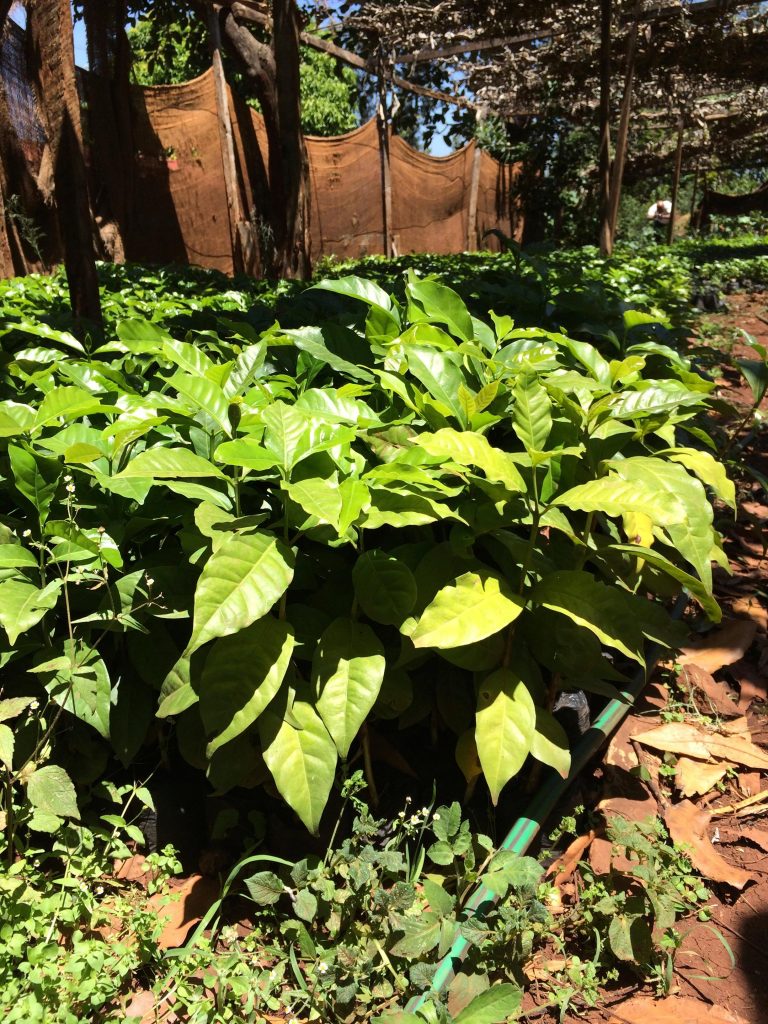
Agroforestry systems can be particularly valuable when shade trees and coffee plants are managed as an integrated production system.
Nutrition and Agricultural Management
High yield and high quality are not necessarily the same thing.
Coffee plants require balanced nutrition throughout their development. Important nutrients include nitrogen, phosphorus, potassium, calcium, magnesium and sulfur, together with various micronutrients.
Excessive fertilization is not an effective substitute for proper farm management.
A better approach is to match nutrient inputs with:
- soil conditions,
- plant requirements,
- leaf nutrient status,
- crop load,
- production goals.
The objective is balanced plant development rather than simply maximizing vegetative growth or yield.
Harvesting and Ripeness
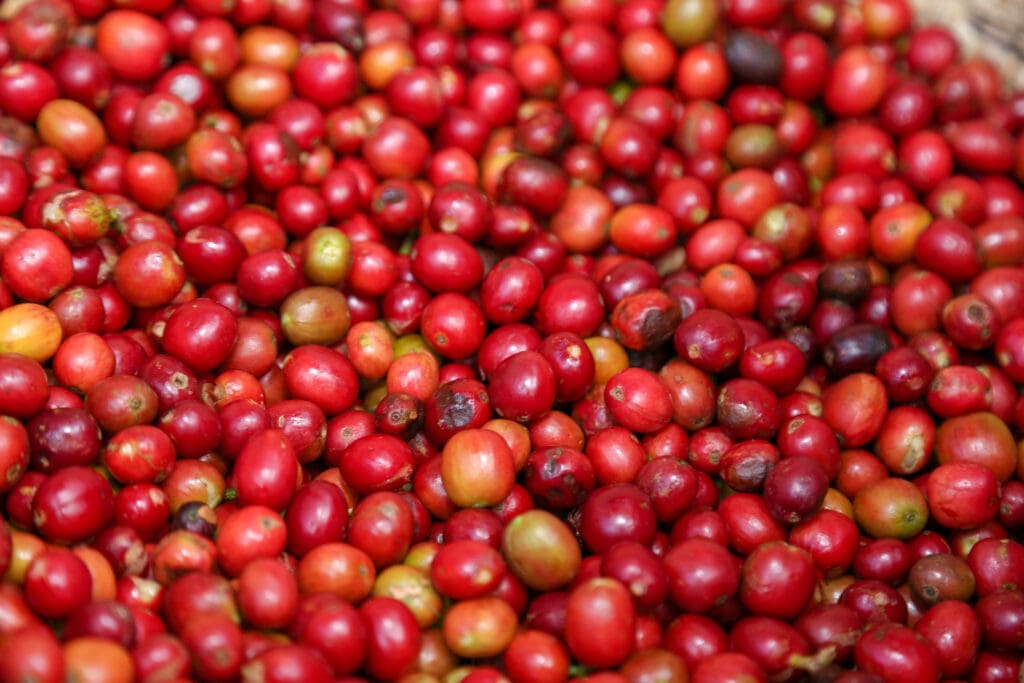
One of the major challenges in coffee harvesting is that cherries on the same plant do not necessarily mature at the same time.
A single plant may simultaneously carry:
- green cherries,
- partially mature cherries,
- fully ripe cherries,
- overripe fruit.
For specialty coffee production, harvesting ripe and healthy cherries is particularly important.
Under-ripe cherries can contribute to:
- vegetal flavors,
- lower sweetness,
- unbalanced acidity.
Overripe or damaged fruit can increase the risk of undesirable fermentation and defects.
This is why selective picking remains an important practice for high-quality Arabica production.
Harvest quality is one of the points where agricultural management directly becomes cup quality.
Processing and the Development of Coffee Character
Once coffee cherries are harvested, processing becomes another major stage in quality development.
The principal processing approaches include Natural, Washed and Honey processing.
Natural Process
The coffee cherry is dried with much of the fruit intact around the seed.
When properly managed, this process can contribute to fruit-driven, intense and complex sensory characteristics.
Washed Process
The fruit and mucilage are largely removed before drying.
Washed coffees are often associated with clean cups, defined acidity and greater clarity of flavor.
Honey Process
The skin is removed while a controlled amount of mucilage remains around the seed during drying.
This approach can create a sensory profile between traditional Natural and Washed coffees, depending on the processing conditions.
Controlled Fermentation
More controlled fermentation approaches have also become increasingly important in specialty coffee.
The objective is not simply to ferment coffee, but to manage the fermentation environment and its effect on the final sensory profile.
Drying and Green Coffee Stability
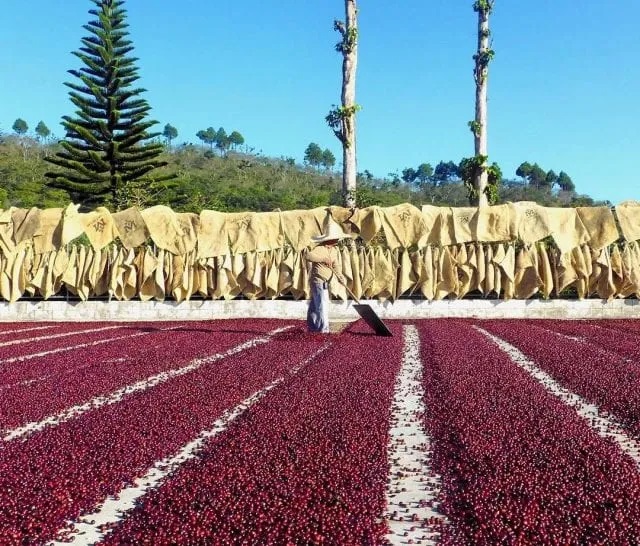
Drying is one of the most important stages after processing.
Coffee that dries too quickly, too slowly or unevenly can develop quality problems.
Poor drying management can increase the risk of:
- undesirable fermentation,
- mold,
- microbial deterioration,
- uneven moisture distribution.
Proper drying should therefore be controlled, gradual and as uniform as possible.
Once drying is complete, moisture stability becomes particularly important for green coffee storage.
Green Coffee Storage
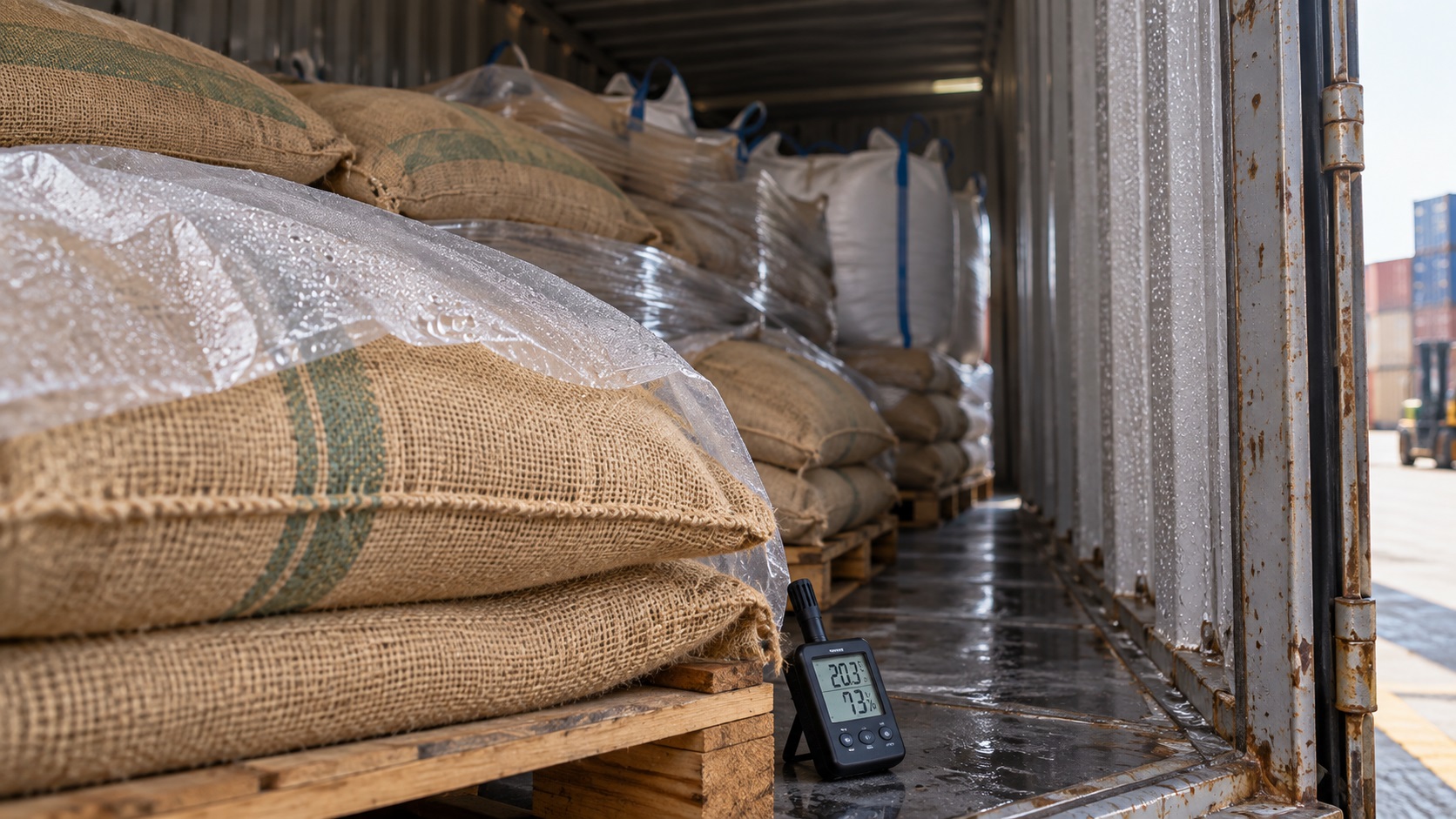
A well-produced coffee can still lose quality if it is stored incorrectly.
Green coffee should be protected from:
- excessive humidity,
- high temperatures,
- direct sunlight,
- oxygen exposure,
- strong external odors.
Storage conditions influence the physical and chemical stability of green coffee.
For this reason, green coffee storage should not be considered an isolated step after production.
It is a continuation of the quality preservation process.
The Quality Chain Behind High-Quality Arabica
High-quality Arabica should be viewed as the result of a connected chain:
| Stage | Main quality factor |
| Genetics | Variety and quality potential |
| Seedling | Healthy starting material |
| Soil | Root development and nutrition |
| Climate | Temperature, rainfall and humidity |
| Altitude | Temperature and maturation conditions |
| Microclimate | Local environmental conditions |
| Farm management | Plant health and productivity |
| Flowering | Beginning of fruit formation |
| Ripening | Sugar and precursor development |
| Harvest | Fruit selection |
| Processing | Chemical and sensory development |
| Drying | Stabilization |
| Storage | Quality preservation |
| Roasting | Development of aromatic potential |
| Cupping | Final sensory evaluation |
The important point is that quality cannot be added at the end of the process.
It must be protected throughout the entire chain.
From Coffee Plant to Cup
When we evaluate acidity, sweetness, body, aroma or aftertaste in a cup of coffee, we are actually experiencing the result of many interconnected stages.
A bright acidity may be influenced by genetics, growing conditions, fruit maturity, processing and roasting.
A pronounced sweetness may reflect the interaction between variety, environment, ripeness, processing and roast development.
A floral or fruit-driven profile can similarly have multiple origins within the production chain.
This is why specialty coffee evaluation should not separate the cup from its agricultural background.
The cup is the final expression of everything that happened before it.
The Malkins Coffee Perspective
At Malkins Coffee, understanding green coffee means looking beyond the physical appearance of the bean.
Every green coffee has a production story behind it.
That story can be understood as:
Plant → Variety → Soil → Climate → Altitude → Producer → Harvest → Processing → Drying → Storage → Green Coffee → Roasting → Cup
Each stage contributes to the final result.
When one part of the chain is poorly managed, the following stages may not be able to completely compensate for the loss.
This is why high-quality Arabica selection requires the evaluation of:
origin, variety, altitude, processing, harvest, physical quality and cup profile.
The true value of green coffee is not only in how the beans look. It is also in understanding how they were grown, harvested, processed and preserved.
Conclusion: Great Coffee Begins With the Plant
The coffee plant is the starting point of everything we eventually experience in the cup.
Coffea arabica has a distinctive genetic structure, a strong relationship with its growing environment and significant potential for producing high-quality coffee.
Yet producing exceptional Arabica is not simply a matter of choosing the right variety.
It requires a combination of:
appropriate genetics + suitable soil + favorable climate + suitable altitude + balanced water availability + healthy plants + effective farm management + selective harvesting + appropriate processing + controlled drying + proper storage.
The most important point is simple:
High-quality coffee is not created in the roasting machine. Its potential is developed years before it reaches the roaster.
Roasting can reveal the potential contained within green coffee.
But that potential begins with the genetics of the plant, the terroir in which it grows and every stage of the production chain.
To truly understand a high-quality Arabica bean, we therefore need to look beyond the bean itself and understand the coffee plant that produced it.
Frequently Asked Questions
1. What is the scientific name of the Arabica coffee plant?
The scientific name is Coffea arabica L. It belongs to the Rubiaceae family and the Coffea genus.
2. What is the difference between Arabica and Robusta?
Coffea arabica and Coffea canephora are different coffee species. Arabica is generally associated with greater aromatic complexity and specialty coffee potential, while Robusta is known for higher caffeine content, strong body and different environmental adaptations.
3. Is Arabica a coffee variety?
No. Arabica is a coffee species. Bourbon, Typica, Caturra, Gesha and SL28 are examples of varieties or genetic materials within Coffea arabica.
4. How long does a coffee plant live?
Coffee plants can remain alive and productive for many years under suitable conditions. Their commercial productive lifespan depends on variety, climate, farm management, disease pressure and environmental conditions.
5. What is the fruit of the coffee plant called?
The fruit is commonly called a coffee cherry. The seeds inside the cherry are processed into green coffee.
6. Is a coffee bean actually a seed?
Yes. Botanically, the coffee bean is the seed found inside the coffee fruit. “Coffee bean” is the established commercial and industry term.
7. How is high-quality Arabica coffee produced?
High-quality Arabica requires suitable genetics, an appropriate growing environment, healthy plant management, selective harvesting, controlled processing, careful drying and proper storage.
8. Does high altitude always mean higher coffee quality?
No. Altitude can influence coffee quality, but it is not a guarantee. Variety, temperature, soil, microclimate, plant management, harvesting and processing also play major roles.
9. Is shade-grown coffee always better?
Not necessarily. Appropriate shade can help regulate microclimate, reduce heat stress and support biodiversity, but excessive shade can limit light availability and photosynthesis. Effective shade management is more important than simply increasing shade.
10. Does green coffee quality begin with the coffee plant?
Yes, but the plant is only the beginning. Genetics and growing conditions establish the quality potential, while harvesting, processing, drying and storage determine how much of that potential is preserved and expressed.
Permalink