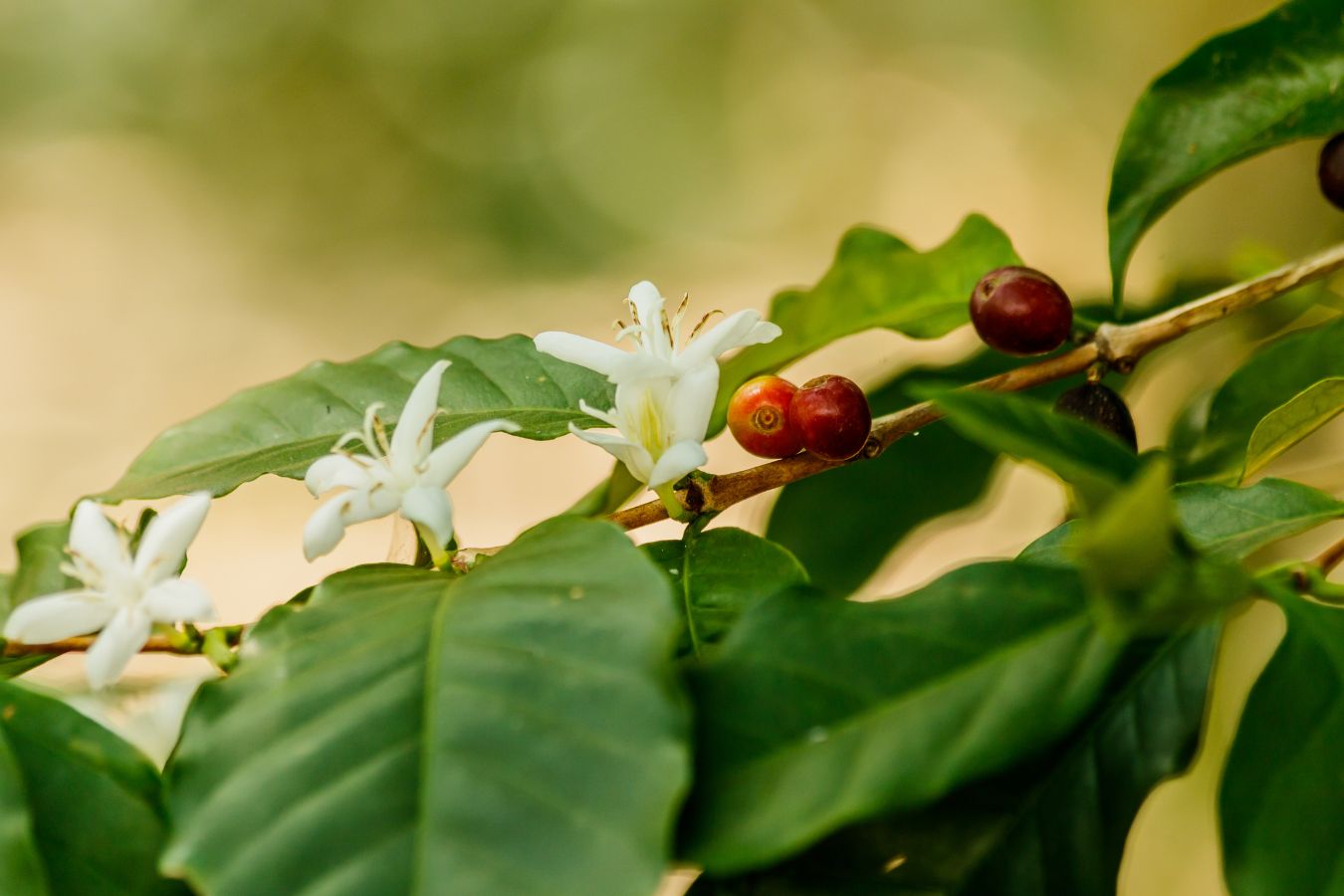


Coffee Types (Arabica vs Robusta): A Comprehensive Guide for Professionals
Coffee Types (Arabica vs Robusta): A Comprehensive Guide for Professionals
Coffee, as a globally traded commodity and a culturally embedded beverage, is fundamentally defined by two dominant species: Coffea arabica and Coffea canephora (Robusta).

While this distinction may appear basic, the underlying differences span botany, agronomy, chemistry, sensory science, and global trade dynamics.
1. Botanical Origin and Genetic Structure
Arabica and Robusta differ significantly at the genetic and botanical level, which directly influences cup quality and cultivation practices.
- Arabica (Coffea arabica) is a tetraploid species (44 chromosomes), originating from the highlands of Ethiopia. Its self-pollinating nature ensures genetic consistency, which is crucial for maintaining stable cup profiles across harvests.
- Robusta (Coffea canephora) is diploid (22 chromosomes) and originates from Central and West Africa. It is cross-pollinating, resulting in greater genetic diversity and adaptability.
Historically, Arabica has been associated with the earliest cultivation and global dissemination of coffee, forming the backbone of traditional coffee culture . Robusta, on the other hand, gained prominence later due to its resilience and productivity.
Key Insight:
Arabica’s genetic stability supports specialty coffee consistency, while Robusta’s variability supports mass production and climate resilience.
2. Agroecology and Growing Conditions
The ecological requirements of Arabica and Robusta define their geographical distribution and influence bean development.
Arabica Agroecology
- Thrives at high altitudes (800–2,200 meters)
- Requires cooler temperatures (15–24°C)
- Sensitive to frost, drought, and pests
- Benefits from slow maturation, which enhances sugar development
Robusta Agroecology
- Grows at lower altitudes (0–800 meters)
- Prefers warmer climates (24–30°C)
- Highly resistant to diseases such as coffee leaf rust
- Exhibits faster fruit maturation and higher yield
Environmental adaptability is a key factor in global production strategies, as highlighted in international coffee trade frameworks .
Professional Perspective:
Altitude-driven maturation in Arabica leads to complex organic acid development, while Robusta’s rapid growth favors volume over complexity.
3. Bean Structure and Physical Characteristics
Beyond species classification, the physical structure of the coffee bean plays a crucial role in roasting behavior and extraction dynamics.
| Attribute | Arabica | Robusta |
| Bean Shape | Oval, elongated | Round, compact |
| Crease (Center Cut) | Curved | Straight |
| Density | Higher (especially high-grown) | Lower to medium |
| Screen Size Uniformity | More consistent | More variable |
Higher density in Arabica beans results in:
- More controlled heat transfer during roasting
- Enhanced development of volatile aromatic compounds
Robusta’s structure, by contrast, supports:
- Faster roasting cycles
- Higher solubility (important for instant coffee production)
4. Chemical Composition and Its Impact on Flavor
The chemical profile of coffee beans is a decisive factor in defining taste, aroma, and physiological effects.
Key Chemical Differences
| Compound | Arabica | Robusta |
| Caffeine | 1.2–1.5% | 2.2–2.7% |
| Sugars | High | Low |
| Lipids | High | Low |
| Chlorogenic Acids | Moderate | High |
- Caffeine contributes bitterness and acts as a natural pesticide
- Sugars and lipids are precursors for Maillard reactions, influencing sweetness and body
- Chlorogenic acids break down during roasting, contributing to bitterness and astringency
Classical literature emphasizes caffeine and aromatic compounds (caffeol) as central to coffee’s stimulating and sensory properties .
Analytical Insight:
Arabica’s chemical composition supports flavor complexity and aromatic depth, while Robusta delivers intensity, bitterness, and functional strength.
5. Sensory Profile and Cupping Characteristics
From a professional cupping perspective, Arabica and Robusta exhibit distinct sensory signatures.
Arabica (Specialty Profile)
- Aroma: Floral, fruity, complex
- Acidity: Bright, malic/citric
- Body: Medium, silky
- Aftertaste: Clean, lingering
Robusta (Commercial Profile)
- Aroma: Earthy, woody, sometimes rubbery
- Acidity: Low
- Body: Heavy, dense
- Aftertaste: Strong, often bitter
In modern cupping protocols:
- Arabica dominates specialty grading systems
- Robusta is evaluated under emerging fine Robusta standards
Cupping Terminology Context:
Arabica aligns with descriptors like clarity, balance, complexity, while Robusta aligns with strength, body, intensity.
6. Processing Methods and Post-Harvest Influence
Coffee Types : Both species undergo similar processing techniques, yet their response differs significantly.
Common Processing Methods
- Washed (Wet Process)
- Natural (Dry Process)
- Honey (Pulped Natural)
Impact on Arabica
- Highly sensitive to fermentation variables
- Produces diverse flavor expressions (fruit-forward, floral, winey)
Impact on Robusta
- Less reactive to subtle processing variations
- Processing mainly reduces harshness rather than adding complexity
Post-harvest steps such as fermentation, drying, and grading are critical in shaping final quality, as extensively documented in coffee processing literature .
7. Market Segmentation and Trade Structure
Arabica and Robusta occupy distinct roles in the global coffee economy.
| Segment | Arabica | Robusta |
| Market Position | Premium / Specialty | Commercial / Industrial |
| Price Volatility | Higher | More stable |
| Main Use | Single-origin, specialty | Instant coffee, blends |
Global trade systems differentiate these coffees through:
- Separate futures markets
- Distinct grading standards
- Quality-based pricing mechanisms
The Coffee Exporter’s Guide highlights segmentation, quality control, and market differentiation as critical in global coffee trade .
8. Roasting Behavior and Extraction Dynamics
Coffee Types : Roasting profiles differ significantly due to bean density and chemical composition.
Arabica Roasting
- Requires precise heat control
- Develops complex aromatics through Maillard and caramelization reactions
- Suitable for light to medium roasts
Robusta Roasting
- Tolerates higher temperatures
- Often roasted darker to reduce bitterness
- Produces strong crema in espresso
Extraction Insight:
Robusta’s higher solubility makes it ideal for:
- Espresso crema enhancement
- Instant coffee production
9. Sustainability, Climate Change, and Future Outlook
Climate change is reshaping coffee production:
- Arabica is highly vulnerable to temperature increases and pests
- Robusta is more adaptable to heat and humidity
Emerging solutions include:
- Hybrid cultivars (Arabica × Robusta)
- Agroforestry systems
- Precision agriculture
Sustainability and climate adaptation are central themes in modern coffee trade and production strategies .
10. Strategic Applications for Industry Professionals
Understanding the distinction between Arabica and Robusta enables:
For Producers
- Crop selection based on climate and altitude
- Yield vs quality optimization
For Roasters
- Blend design for flavor balance and cost control
- Roast profiling strategies
For Buyers & Traders
- Market segmentation and pricing strategies
- Risk management and sourcing diversification
Conclusion
Arabica and Robusta represent two fundamentally different paradigms within the coffee industry. Arabica defines quality, complexity, and specialty value, while Robusta ensures volume, resilience, and economic sustainability.
For professionals operating across the coffee value chain, mastering the interplay between these two species is essential—not only for quality optimization but also for navigating the evolving challenges of climate change, market demand, and global trade dynamics.
(FAQ) – Coffee Types (Arabica vs Robusta)
The primary difference lies in flavor, chemical composition, and growing conditions. Arabica coffee offers a smoother, more complex flavor with higher acidity, while Robusta is stronger, more bitter, and contains significantly more caffeine.
Robusta contains twice as much caffeine as Arabica. This higher caffeine content contributes to its more bitter taste and stronger body.
Arabica is generally regarded as higher quality due to its complex aroma, balanced acidity, and refined flavor profile. It is widely used in specialty coffee and premium segments.
Not necessarily. While traditionally used in commercial blends, fine Robusta has gained recognition in recent years for its improved processing and quality, especially in specialty espresso blends.
Both are used in espresso. Arabica provides sweetness and acidity, while Robusta adds crema, body, and intensity. Many espresso blends combine both for balance.
Arabica is typically grown at higher altitudes in countries like Brazil, Colombia, and Ethiopia. Robusta thrives in lower altitudes and warmer climates, especially in Vietnam, Indonesia, and Uganda.
Robusta has a stronger genetic structure and higher caffeine content, which acts as a natural pest deterrent. This makes it more resilient against diseases like coffee leaf rust.
Higher altitudes slow the maturation of Arabica beans, enhancing flavor complexity and acidity. Robusta, grown at lower altitudes, develops a more straightforward and bold taste profile.
Robusta is considered more climate-resilient due to its tolerance to heat and disease. However, ongoing research is developing hybrid varieties to preserve Arabica quality under changing conditions.
It depends on your preference. Choose Arabica for a smooth, aromatic, and complex cup. Opt for Robusta if you prefer a strong, bold, and high-caffeine coffee experience.