

Coffee Fermentation: Methods, Science & Flavor Impact Guide
Coffee Fermentation: A Scientific and Sensory Guide to Flavor Development in Specialty Coffee
Coffee fermentation has rapidly evolved from a traditional processing step into one of the most critical variables shaping cup quality, sensory complexity, and market differentiation.

In today’s specialty coffee landscape, fermentation is no longer just a necessary stage in post-harvest processing—it is a controlled, experimental, and often decisive factor in defining a coffee’s final profile.
What Is Fermentation in Coffee Processing?
Fermentation, in its most fundamental definition, is a metabolic process in which microorganisms convert complex compounds—primarily sugars—into simpler substances such as acids, gases, or alcohols.
In coffee processing, however, fermentation has a more specific and functional role.
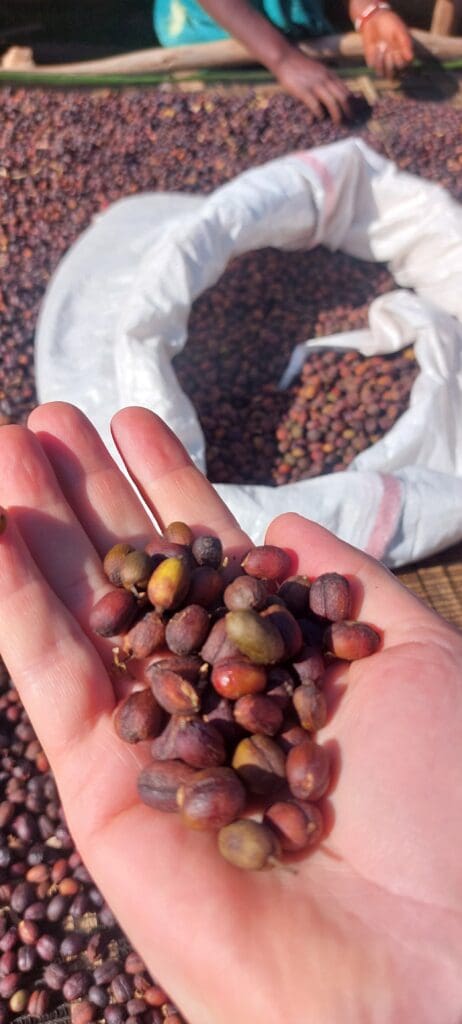
Unlike wine or beer, coffee is not a fermented beverage. Instead, fermentation is applied during post-harvest processing to break down the mucilage layer (a sticky, sugar-rich substance) surrounding the coffee bean.
Key Functions of Coffee Fermentation:
- Degradation of mucilage for easier washing and drying
- Development of precursor compounds that influence aroma and flavor
- Modification of acidity, body, and sweetness
- Enhancement or deterioration of sensory quality depending on control
Almost all coffee processing methods—except fully mechanical systems—incorporate fermentation in some form.
The Science Behind Coffee Fermentation
Fermentation in coffee involves a complex microbiological ecosystem consisting of yeasts, bacteria, and enzymes. These microorganisms metabolize sugars present in the mucilage, producing various by-products that directly influence flavor.
Core Biochemical Pathways
| Fermentation Type | Microorganism | Main By-products | Sensory Impact |
| Alcoholic Fermentation | Yeasts | Ethanol, CO₂ | Fruity, wine-like notes |
| Lactic Fermentation | Lactic bacteria | Lactic acid | Creamy body, soft acidity |
| Acetic Fermentation | Acetic bacteria | Acetic acid | Sharp, vinegar-like notes |
Research has shown that during fermentation:
- Glucose levels steadily decrease
- Lactic acid and ethanol increase significantly toward the final stages
- pH levels drop, with optimal fermentation typically ending around pH 4.6
This pH threshold is critical, as it helps prevent the development of undesirable flavors such as excessive sourness or chemical off-notes.
Microbiota and “Microbial Terroir”
An emerging concept in coffee science is microbial terroir—the idea that local microbial populations contribute uniquely to a coffee’s flavor profile.
Microorganisms vary significantly by region:
- African coffees often exhibit vibrant acidity and fruit-forward profiles
- Latin American coffees tend toward balanced sweetness and clarity
- Asian coffees may develop heavier body and earthy tones
These differences are not solely due to climate or soil, but also to distinct microbial ecosystems present during fermentation.
How Fermentation Impacts Coffee Quality
Fermentation is a double-edged sword: when controlled, it enhances quality; when mismanaged, it degrades it.
Positive Effects of Controlled Fermentation:
- Increased aromatic complexity
- Enhanced perceived sweetness
- Balanced acidity
- Cleaner cup profile
Risks of Poor Fermentation Control:
- Over-fermentation leading to sour or “fermented” defects
- Moldy or phenolic off-flavors
- Loss of body and structural balance
Producers must carefully monitor:
- Time (typically 10–24 hours depending on method)
- Temperature (optimal range: 20–25°C)
- Oxygen exposure
- pH levels
Major Coffee Fermentation Methods
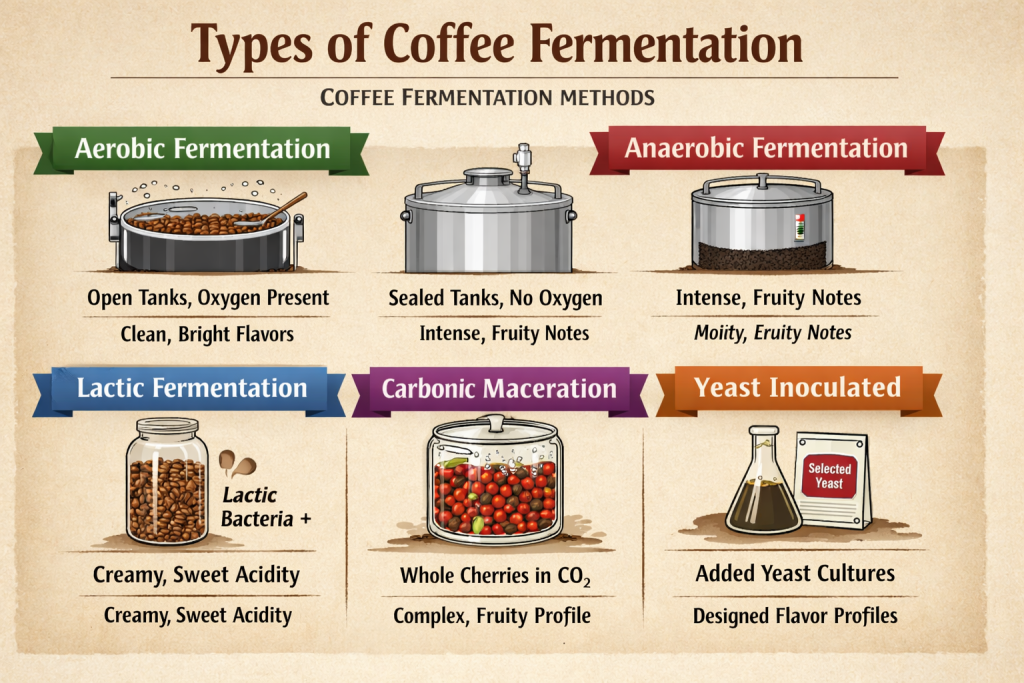
Modern coffee processing includes both traditional and experimental fermentation techniques. These methods differ primarily in oxygen exposure and microbial control.
1. Aerobic Fermentation
Occurs in oxygen-rich environments.
- Common in traditional washed processing
- Takes place in open tanks or during drying
- Produces clean, bright flavor profiles
2. Anaerobic Fermentation
Occurs in low-oxygen or oxygen-free environments.
- Conducted in sealed tanks
- Allows precise control over fermentation variables
- Often results in intense, exotic flavor notes
3. Lactic Fermentation
A subtype of anaerobic fermentation dominated by lactic acid bacteria.
- Produces creamy mouthfeel
- Enhances sweetness and smooth acidity
- Requires controlled environments for consistency
4. Carbonic Maceration
Borrowed from the wine industry.
- Whole coffee cherries are fermented in CO₂-rich environments
- Can last several days or weeks
- Produces highly complex, fruit-forward profiles
This method gained global recognition after being popularized in specialty coffee competitions.
5. Yeast-Inoculated Fermentation
Involves adding selected commercial yeast strains.
- Enables consistency and predictability
- Allows producers to “design” flavor profiles
- Often used in experimental and high-end specialty lots
Fermentation Across Processing Methods
Fermentation interacts differently depending on the processing method used:
| Processing Method | Fermentation Role | Flavor Outcome |
| Washed | Full mucilage removal via fermentation | Clean, bright, high clarity |
| Natural | Fermentation during drying with fruit | Fruity, heavy body, wine-like |
| Honey | Partial mucilage retained during drying | Sweet, balanced, complex |
| Giling Basah | Partial fermentation in wet-hulled process | Earthy, full-bodied |
Historical Context of Fermentation
Fermentation is not unique to coffee—it dates back over 8,000 years, with early civilizations using it for wine, beer, and other foods.

The scientific understanding of fermentation advanced significantly in the 19th century through the work of Louis Pasteur, who identified the role of microorganisms in converting sugars into alcohol and acids.
In coffee, however, fermentation remained largely empirical until recent decades, when scientific research and specialty coffee innovation transformed it into a precision-driven process.
Best Practices for Controlled Coffee Fermentation
To achieve consistent, high-quality results, producers follow strict fermentation protocols:
Critical Control Factors:
- Time: Avoid under- or over-fermentation
- Temperature: Maintain stable thermal conditions
- pH Monitoring: Ensure optimal acidity levels
- Hygiene: Prevent contamination from undesirable microbes
- Water Quality: Especially crucial in wet fermentation
The Future of Coffee Fermentation
Coffee fermentation is entering a new era driven by:
- Microbiological research
- Data-driven processing techniques
- Specialty market demand for unique flavor profiles
Innovations such as controlled inoculation, precision fermentation tanks, and AI-supported monitoring systems are redefining how producers approach post-harvest processing.
Despite these advancements, one principle remains constant:
Coffee should ultimately be evaluated by its cup profile—not by the complexity or trendiness of its processing method.
Conclusion
Coffee fermentation is both an art and a science. It bridges traditional knowledge with modern innovation, offering producers a powerful tool to shape flavor, differentiate products, and elevate quality.
From microbial activity to environmental control, every variable in fermentation contributes to the final sensory experience. Understanding and mastering this process is essential for anyone involved in specialty coffee—from producers and roasters to buyers and sensory professionals.
Frequently Asked Questions
1. What is coffee fermentation?
Coffee fermentation is a controlled metabolic process where microorganisms break down sugars in the coffee mucilage into acids, alcohols, and gases. This step is essential in post-harvest processing and directly impacts flavor, aroma, and overall cup quality.
2. Why is fermentation important in coffee processing?
Fermentation helps remove mucilage from the coffee bean and enhances sensory attributes such as acidity, sweetness, and aroma complexity. Proper fermentation can significantly elevate specialty coffee quality.
3. How does fermentation affect coffee flavor?
Fermentation influences flavor by producing organic acids and aromatic compounds. It can create fruity, floral, wine-like, or creamy profiles depending on the method and level of control.
4. What are the main types of coffee fermentation?
The primary fermentation types include:
- Aerobic fermentation
- Anaerobic fermentation
- Lactic fermentation
- Carbonic maceration
- Yeast-inoculated fermentation
Each method produces distinct flavor characteristics and is widely used in specialty coffee production.
5. What is anaerobic fermentation in coffee?
Anaerobic fermentation occurs in oxygen-free environments, typically in sealed tanks. This method allows precise control and often results in complex, fruit-forward, and intense flavor profiles.
6. What is the ideal fermentation time for coffee?
Fermentation time usually ranges between 10 to 24 hours, depending on temperature, altitude, and processing method. Over-fermentation can lead to defects, while under-fermentation may result in flat flavors.
7. What happens if coffee is over-fermented?
Over-fermented coffee can develop unpleasant flavors such as sourness, vinegar-like acidity, moldy notes, or chemical off-flavors. It may also lose body and balance.
8. What is microbial terroir in coffee fermentation?
Microbial terroir refers to the unique combination of local microorganisms (yeasts and bacteria) that influence fermentation. These microbial ecosystems vary by region and contribute to distinct regional flavor profiles.
9. Is fermentation used in all coffee processing methods?
Yes, most coffee processing methods involve fermentation, except fully mechanical processes. Even natural and honey-processed coffees undergo some level of fermentation during drying.
10. What is carbonic maceration in coffee?
Carbonic maceration is an advanced fermentation technique where whole coffee cherries are fermented in a carbon dioxide-rich environment. It produces highly aromatic, fruity, and complex cup profiles.
11. Can fermentation improve coffee quality?
Yes, when properly controlled, fermentation enhances sweetness, clarity, acidity, and aromatic complexity, making it a key factor in specialty coffee differentiation.
12. What variables control coffee fermentation?
Key variables include:
- Temperature
- Time
- Oxygen levels
- pH levels
- Microbial activity
Precise control of these factors is essential for consistent quality.