

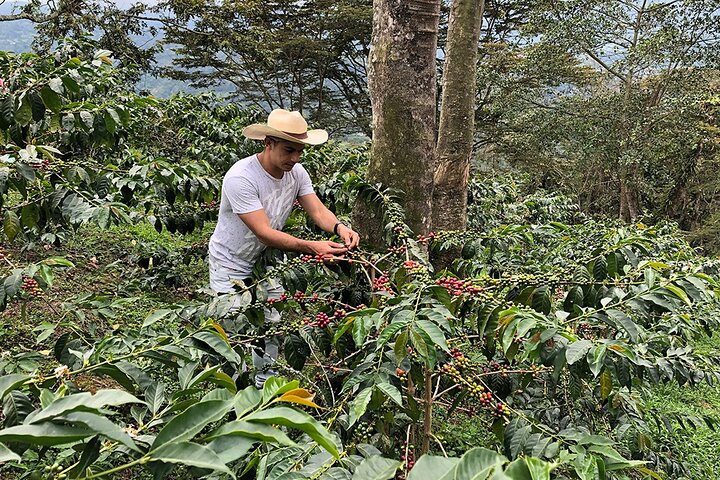
How Does Altitude Affect Coffee Quality? A Guide to Altitude, Ripening and Arabica Coffee
How Does Altitude Affect Coffee Quality? A Guide to Altitude, Ripening and Arabica Coffee
When discussing coffee quality, altitude is one of the most frequently mentioned characteristics of a coffee’s origin. Arabica coffee, in particular, is often associated with high-altitude growing regions.
However, an important distinction should be made: high altitude does not automatically mean high-quality coffee.
The effect of altitude is closely connected to temperature, rainfall, sunlight, microclimate, soil, coffee variety, harvesting and processing practices. As elevation increases, temperatures generally become lower, which can slow the development and ripening of coffee cherries. This longer maturation period can influence the chemical composition of the beans and, consequently, the sensory characteristics of the final cup.
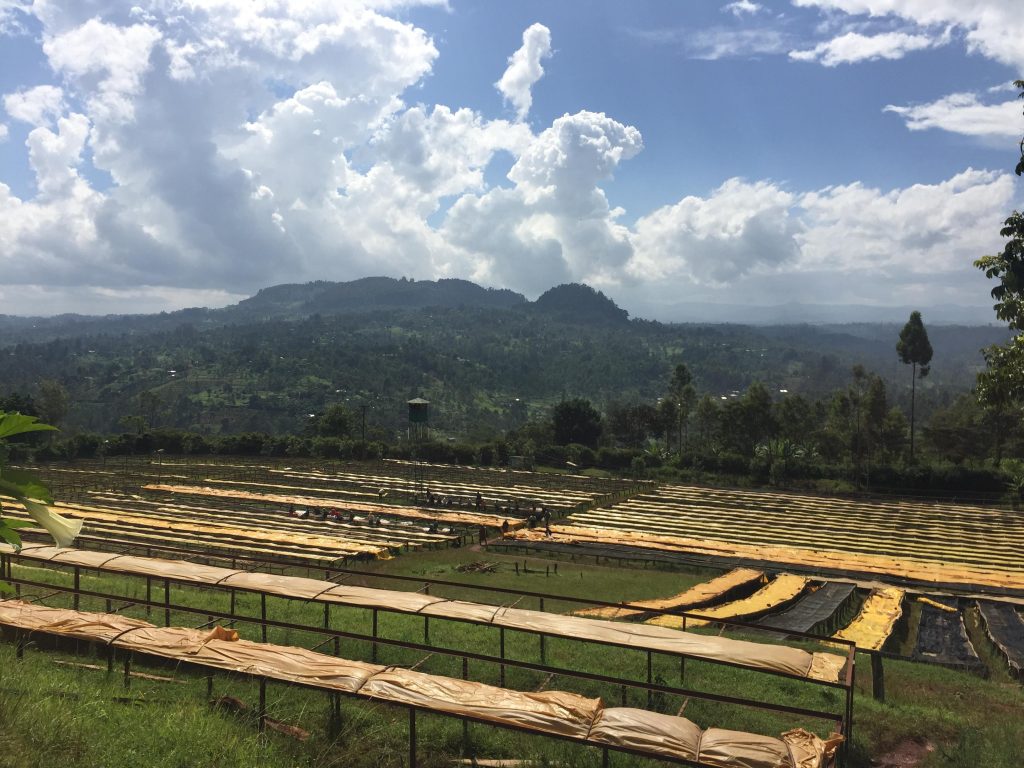
For this reason, altitude should be considered an important part of the growing environment rather than a standalone indicator of coffee quality.
What Is Coffee Growing Altitude and Why Does It Matter?
Altitude refers to the elevation of the coffee-growing area above sea level and is generally expressed as meters above sea level (masl).

Altitude is particularly important in Arabica coffee production because increasing elevation generally brings changes in environmental conditions.
As altitude increases, there is generally:
• Lower average temperature
• Changes in day and night temperature differences
• Slower coffee cherry development
• Changes in plant growth rates
• Different sunlight and radiation conditions
• Greater influence of topography and microclimate
Altitude therefore plays an important role in shaping the microclimate in which the coffee plant grows.
How Does High Altitude Affect Coffee Plant Development?
Higher-altitude coffee-growing regions generally experience cooler temperatures. These conditions can influence the physiological development of the coffee plant.
Lower temperatures may slow the development and ripening of coffee cherries. A longer maturation period gives the fruit more time to develop and accumulate different compounds that can contribute to the coffee’s eventual sensory profile.
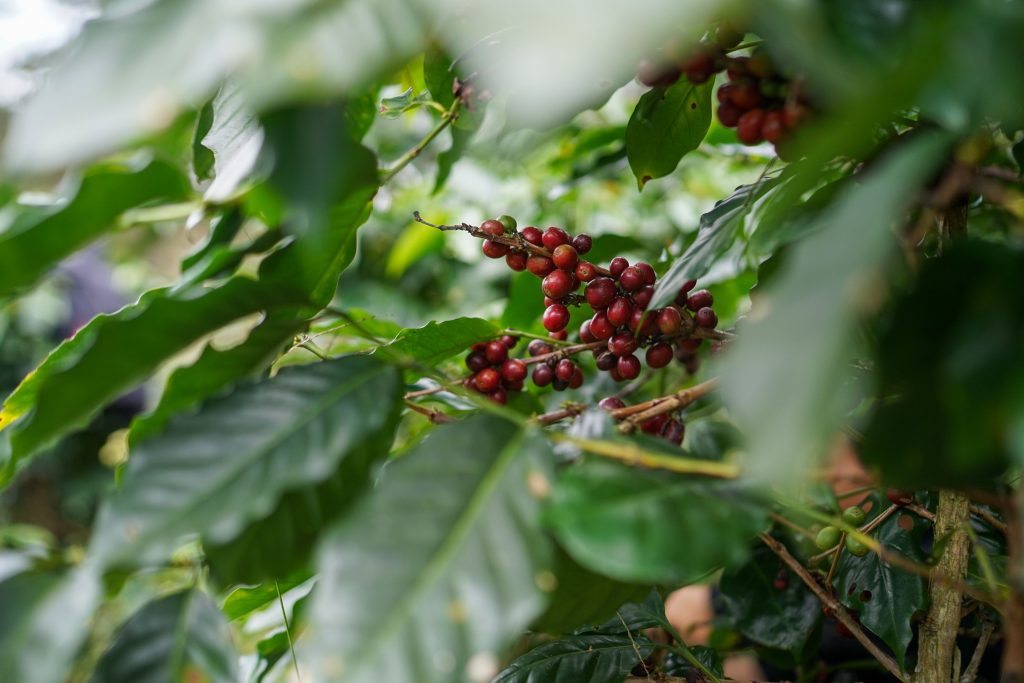
The development process can be summarized as:
Flowering → Fruit formation → Development → Ripening
Each stage is influenced by environmental conditions.
Altitude does not independently determine the development of the coffee cherry, but its relationship with temperature makes it an important factor in understanding coffee maturation.
Altitude and Temperature in Coffee Production
One of the most important connections between altitude and coffee quality is the relationship between elevation and temperature.

As elevation increases, atmospheric temperatures generally decrease. Therefore, two coffee farms at different elevations within a similar geographic area may experience significantly different growing conditions.
This is particularly relevant for Arabica coffee.
Altitude tendency General environmental condition Potential coffee effect
Lower altitude Warmer conditions Faster development and ripening
Mid altitude Moderate conditions Balanced development
Higher altitude Cooler conditions Slower cherry development
Very high altitude Colder conditions and increased environmental risk Delayed maturation or cold stress
These categories should not be treated as universal altitude standards. The same elevation can produce different growing conditions depending on latitude, topography and microclimate.
Therefore, when evaluating a green coffee lot, asking only “What is the altitude?” is not enough.
A more useful question is:
“What are the actual temperature and microclimate conditions at this altitude?”
How Does Altitude Affect Coffee Cherry Ripening?
One of the most important links between altitude and coffee quality is ripening speed.
Cooler conditions at higher elevations can slow the development of coffee cherries. This extended maturation period may influence the development and balance of sugars, organic acids and aroma-related compounds within the fruit.

As a result, some high-altitude Arabica coffees may display characteristics such as:
• More pronounced acidity
• Greater aromatic complexity
• Higher perceived sweetness
• Longer and more layered cup profiles
However, these characteristics cannot be attributed to altitude alone.
Coffee variety, soil, microclimate, harvest maturity, processing and drying conditions also play significant roles.
Does Altitude Affect Coffee Acidity?
Acidity is one of the characteristics frequently associated with high-altitude Arabica coffees.
In specialty coffee, acidity is not necessarily a defect. It is an important component of cup structure and can contribute to a coffee’s brightness, liveliness and complexity.
Under suitable genetic and environmental conditions, high-altitude coffees may show:
• Citrus-like acidity
• Malic acidity
• Tartaric characteristics
• Brighter and cleaner cup profiles
However, it would be inaccurate to establish a simple equation such as:
High altitude = high acidity
Acidity is influenced by many factors, including variety, climate, soil, harvest timing, processing and roasting.
Does High Altitude Increase Coffee Sweetness?
Sweetness in coffee is the result of multiple factors.
During coffee cherry maturation, the development of sugars and other compounds contributes to the eventual sensory profile. Cooler growing conditions and slower maturation may, in some coffees, support a more balanced relationship between sweetness, acidity and aroma.
High-altitude Arabica coffees may therefore sometimes present sensory notes associated with:
• Caramel
• Honey
• Brown sugar
• Fruit sweetness
• Ripe fruit
However, sweetness cannot be explained by altitude alone.
The ripeness of the coffee cherries at harvest is particularly important.
Two coffees grown at the same altitude can have very different sweetness if one is harvested at a less mature stage than the other.
Does Altitude Affect Green Coffee Bean Density?
Bean density is an important physical characteristic when evaluating green coffee.
Cooler growing conditions and slower development can be associated with denser bean structures in some coffees. However, density is not determined by altitude alone.
Other important factors include:
Factor Influence on bean density
Altitude Influences temperature and development rate
Variety Determines genetic characteristics
Temperature Influences fruit development
Soil Influences nutrient and water availability
Rainfall Influences plant water balance
Ripeness Influences bean development
Harvest timing Influences physical and sensory quality
Processing Can affect physical bean characteristics
Therefore, altitude should be treated as one piece of information rather than a direct measure of green bean density.
Are High-Altitude Coffee Beans Always Harder?
Not necessarily.
Terms such as hard bean are sometimes used to describe denser physical structures associated with certain growing environments.
However, bean hardness and density cannot be explained by altitude alone. Genetics, temperature, soil, rainfall, maturity and other environmental factors also contribute.
For green coffee professionals, altitude is therefore useful context, but physical analysis should still include measurements such as density, moisture and screen size.
Does Low-Altitude Coffee Mean Lower Quality?
No.
Low altitude does not automatically mean low-quality coffee.
Some low- and medium-altitude coffee-growing regions can produce highly distinctive and high-quality coffees when suitable microclimates, varieties, agricultural practices, selective harvesting and effective processing are combined.
Altitude should therefore be viewed as an environmental indicator and quality potential factor, rather than a universal quality ranking.
The final quality of coffee results from a much broader chain:
Genetics + altitude + climate + microclimate + soil + farming + harvesting + processing + drying + storage + roasting
Is Very High Altitude Always Better for Coffee?
No.
Coffee plants have specific environmental limits.
As altitude increases, temperatures decrease. At a certain point, extremely low temperatures can become a disadvantage rather than an advantage.
Very high-altitude environments can involve:
• Low temperatures
• Cold stress
• Excessively slow maturation
• Flowering challenges
• Frost risk
• Lower productivity
The objective is therefore not to grow coffee at the highest possible altitude, but to find the appropriate environmental conditions for a particular Arabica variety and production system.
Altitude, Latitude and Microclimate Must Be Considered Together
Altitude should always be interpreted together with latitude.
An elevation of 1,500 meters near the equator does not necessarily create the same growing conditions as 1,500 meters at a different latitude.
Topography and local environmental conditions also matter, including:
• Slope orientation
• Sun exposure
• Wind
• Rainfall
• Cloud cover
• Night-time temperatures
• Soil moisture
For this reason, a professional green coffee evaluation should consider:
Country → Region → Farm → Altitude → Latitude → Microclimate → Variety → Harvest → Processing
This provides a much more complete understanding of a coffee than altitude alone.
Altitude and Specialty Coffee
In specialty coffee, altitude is an important piece of information for understanding a coffee’s production environment and traceability.
When evaluating a specialty green coffee lot, altitude can help provide context about:
• Growing conditions
• Potential ripening speed
• Bean structure
• Microclimate
• Possible cup characteristics
However, professional evaluation should not rely on altitude alone.
Green grading, physical analysis and cupping should be considered together with production information.
Important evaluation parameters may include:
• Moisture
• Density
• Screen size
• Defect analysis
• Green grading
• Cupping results
Does Altitude Affect the Coffee Roasting Profile?
Altitude can influence roasting indirectly.
The environmental conditions associated with altitude can affect bean development and physical structure. These characteristics may influence how the green coffee responds to heat during roasting.
Roasters may therefore consider:
• Bean density
• Moisture content
• Screen size
• Variety
• Processing method
• Growing altitude
The important point is not to convert altitude directly into a roasting recipe, but to use altitude as part of the broader information required to understand the physical characteristics of the green coffee.
How Does Altitude Affect Coffee Quality? A Quick Summary
Factor General relationship
Temperature Generally decreases as altitude increases
Ripening May become slower under cooler conditions
Sugar development Can change with the maturation process
Acidity May be more pronounced in some high-altitude Arabica coffees
Aroma Can have greater complexity under suitable conditions
Bean density May increase under certain cooler growing conditions
Roasting Physical bean characteristics can influence heat response
Microclimate Can significantly modify altitude effects
Quality Altitude alone does not guarantee quality
Malkins Coffee Perspective on Altitude and Green Coffee
For Malkins Coffee, altitude is an important part of understanding the story and production environment of a green coffee.
However, describing a coffee simply as:
“1,600-meter Arabica”
does not fully explain its character.
A more comprehensive evaluation considers:
country + region + farm + altitude + variety + microclimate + harvest + processing + physical quality + cupping
Together, these factors provide a much clearer picture of the coffee’s potential.
Especially when working with traceable green coffees sourced through direct relationships with farms and producers, production information can help connect the physical green bean to its agricultural environment and eventual cup profile.
Altitude is only one part of this story.
But when interpreted correctly, it can provide valuable insight into why a coffee develops particular physical, aromatic and sensory characteristics.
Conclusion: Altitude Shapes Coffee Quality Potential, But Does Not Determine It
Does altitude affect coffee quality?
Yes.
But it would be inaccurate to interpret the relationship simply as:
High altitude = high quality.
The importance of altitude comes largely from its relationship with temperature and microclimate. Higher elevations generally have cooler temperatures, which can slow coffee cherry development and maturation. Under suitable conditions, this can contribute to differences in acidity, sweetness, aroma, bean density and cup complexity.
However, the final quality of coffee is shaped by a much broader system:
Altitude + climate + microclimate + genetics + soil + farming + harvesting + processing + drying + storage + roasting
For this reason, altitude is an important parameter when evaluating green coffee, but it should never be used as the sole indicator of quality.
In short:
Altitude does not determine coffee quality on its own; it is an important environmental factor that can shape the quality potential of the coffee.
Frequently Asked Questions (FAQ)
1. How does altitude affect coffee quality?
Altitude can influence coffee quality mainly through its effect on temperature and microclimate. Higher elevations generally have cooler temperatures, which may slow coffee cherry maturation and contribute to differences in acidity, sweetness, aroma and bean structure.
2. Is high-altitude coffee always higher quality?
No. High altitude does not automatically mean higher-quality coffee. Variety, climate, microclimate, soil, harvesting, processing and drying all contribute to the final quality of a coffee.
3. Why is altitude important for Arabica coffee?
Arabica coffee is particularly sensitive to its growing environment. Changes in elevation can influence temperature and maturation speed, making altitude an important factor when evaluating the growing conditions and potential cup characteristics of Arabica coffee.
4. Does high altitude make coffee more acidic?
High-altitude Arabica coffees may show more pronounced acidity under suitable growing conditions. However, acidity is influenced by many factors, including variety, climate, soil, harvest maturity, processing and roasting.
5. Does altitude increase coffee sweetness?
Cooler temperatures at higher elevations can slow cherry maturation and may contribute to balanced sweetness and flavor development in some coffees. However, sweetness also depends strongly on variety, cherry maturity, agricultural practices and processing.
6. Does altitude affect green coffee bean density?
Yes, altitude can influence bean density indirectly through temperature and growing conditions. Some coffees grown under cooler conditions may develop denser bean structures, but density is also affected by genetics, soil, climate and fruit maturity.
7. Is low-altitude coffee lower quality?
No. Low altitude does not automatically indicate lower quality. High-quality coffee can be produced at low and medium elevations when suitable varieties, microclimates, farming practices, harvesting and processing are combined.
8. What is the ideal altitude for Arabica coffee?
There is no single ideal altitude for all Arabica coffee. Suitable elevation varies according to latitude, variety, climate, microclimate and local growing conditions. Altitude should therefore be evaluated together with actual temperature and environmental conditions.
9. Does altitude affect coffee roasting?
Altitude can affect roasting indirectly because growing conditions may influence bean density, moisture and physical structure. Roasters can use altitude as part of the green coffee profile, together with density, moisture, screen size, variety and processing method.
10. Why is altitude important when buying green coffee?
Altitude provides useful information about the coffee’s growing environment and potential characteristics. However, professional green coffee evaluation should also consider origin, region, farm, variety, processing method, harvest period, moisture, density, physical defects and cupping results.
Permalink