
Coffee Growing Regions in Brazil: Exploring the Terroirs Behind the World’s Largest Coffee Producer
Coffee Growing Regions in Brazil: Exploring the Terroirs Behind the World’s Largest Coffee Producer
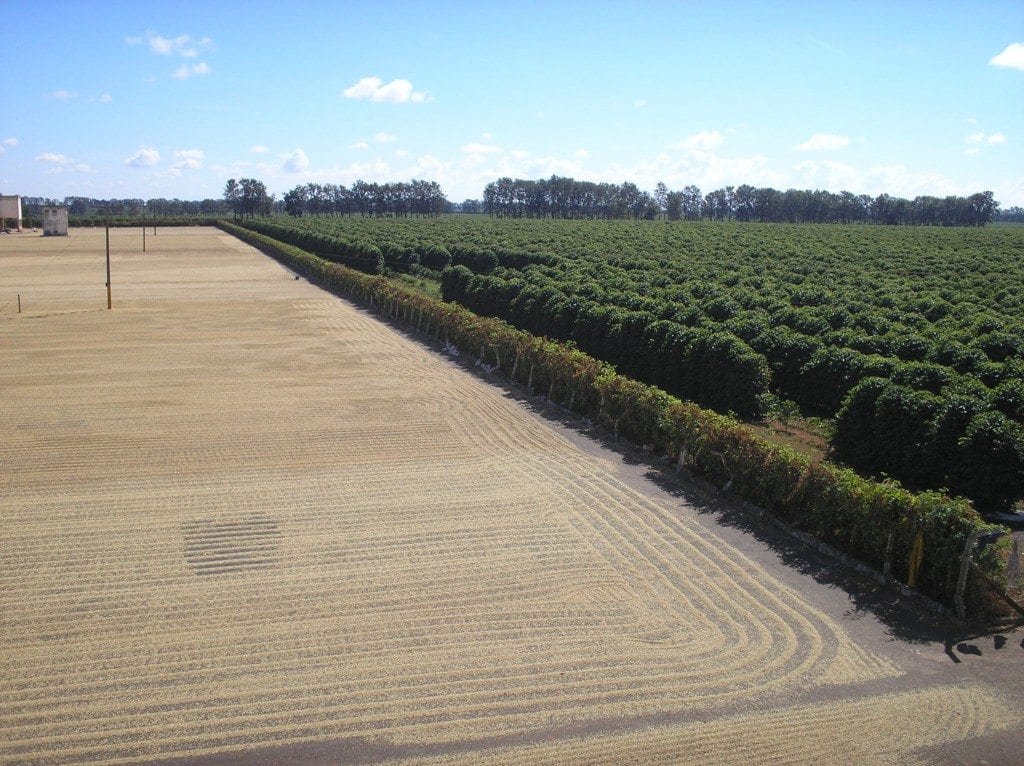
Brazil is not only the world’s largest coffee producer but also one of the most influential countries shaping the global coffee industry. For more than a century, Brazil has maintained its position as the leading coffee-producing nation, accounting for more than one-third of global coffee production. This remarkable success is driven by vast agricultural lands, diverse climatic conditions, varying altitudes, advanced farming technologies, and generations of expertise in coffee cultivation.
While Brazil is often associated with Arabica coffee, the country is also a significant producer of Robusta coffee, locally known as Conilon. With the rapid growth of the specialty coffee sector, Brazil’s coffee-producing regions have gained recognition for their unique terroirs, distinct cup profiles, and exceptional quality.
In this comprehensive guide, we will explore the major coffee-growing regions of Brazil, their environmental characteristics, coffee varieties, processing traditions, and the flavor profiles that have made Brazilian coffee a cornerstone of the global coffee trade.
The Foundations of Brazilian Coffee Production
Brazil’s dominance in coffee production is built upon three key advantages:
| Factor | Contribution |
| Vast agricultural land | Enables large-scale production |
| Diverse climates and altitudes | Creates a wide range of flavor profiles |
| Advanced agricultural technology | Increases productivity and consistency |
Coffee-growing regions in Brazil range from approximately 600 to 1,500 meters above sea level. These varying elevations contribute to different maturation rates, allowing producers to develop unique sensory characteristics and diverse cup profiles.
Brazil’s Coffee Map
The main coffee-producing states in Brazil include:
- Minas Gerais
- São Paulo
- Espírito Santo
- Bahia
- Paraná
- Rondônia
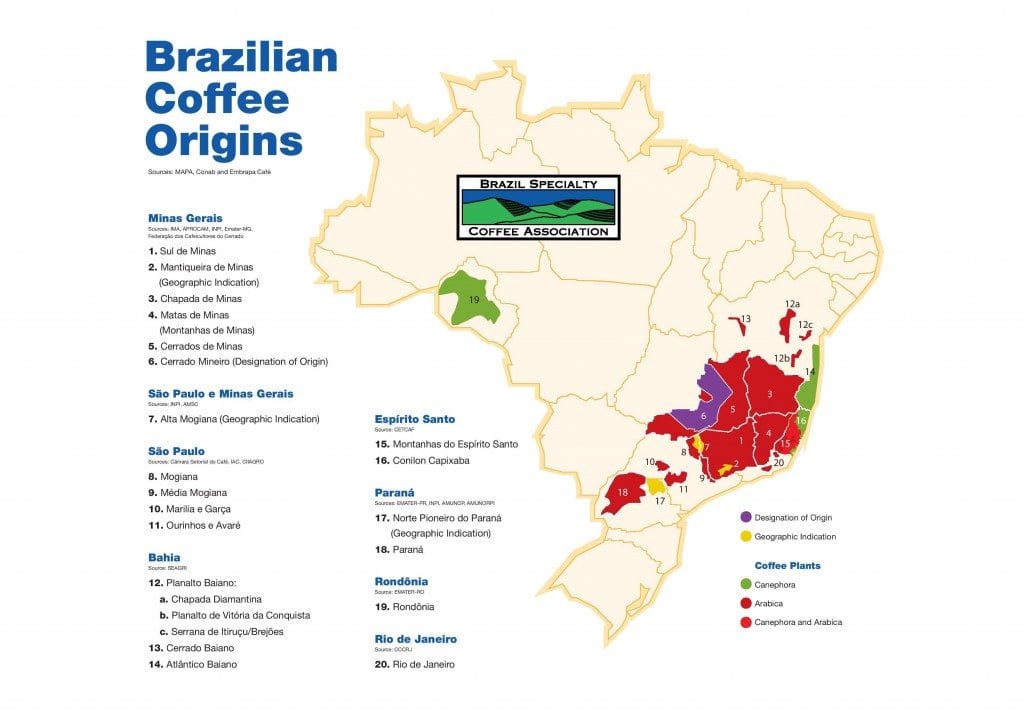
Among these, Minas Gerais is widely recognized as the heart of Brazilian coffee production.
Minas Gerais: The Capital of Brazilian Coffee
Minas Gerais is responsible for more than half of Brazil’s coffee production and is the country’s most important Arabica-growing state.
The region is divided into four major coffee-producing areas:
Sul de Minas
Sul de Minas is one of the most recognized specialty coffee regions in Brazil and serves as a benchmark for high-quality Brazilian Arabica.
Key Characteristics
- Altitude: 900–1,300 meters
- Mild climate
- Consistent rainfall
- Mineral-rich soils
Cup Profile
- Milk chocolate
- Caramel
- Hazelnut
- Cocoa
- Low acidity
- Balanced body
Many espresso blends around the world rely on coffees sourced from Sul de Minas due to their sweetness and consistency.
Cerrado Mineiro
Cerrado Mineiro was the first coffee-producing region in Brazil to receive a Protected Geographical Indication (PGI).
Key Characteristics
- Altitude: 800–1,300 meters
- Clearly defined dry and rainy seasons
- Ideal conditions for mechanized harvesting
Cup Profile
- Almond
- Caramel
- Cocoa
- Clean finish
- Round body
Its consistency and traceability make Cerrado Mineiro highly valued among international roasters and green coffee buyers.
Mantiqueira de Minas
Mantiqueira de Minas has emerged as one of Brazil’s most exciting specialty coffee regions.
Key Characteristics
- Mountainous terrain
- Altitudes ranging from 1,100 to 1,500 meters
- Slow cherry maturation
Cup Profile
- Red fruits
- Honey
- Floral notes
- Citrus nuances
- Complex acidity
Many award-winning lots from Cup of Excellence competitions originate from this region.
Chapada de Minas
Located in northern Minas Gerais, Chapada de Minas is an emerging coffee-producing area known for its innovative farming practices.
Cup Profile
- Yellow fruits
- Sugar cane sweetness
- Caramel
- Medium body
Modern irrigation systems and improved agricultural techniques have helped producers achieve remarkable quality levels.
São Paulo: The Historical Center of Brazilian Coffee
São Paulo played a critical role in the development of Brazil’s coffee economy and remains an important producing state today.
Two notable coffee-growing areas stand out:
Mogiana
Mogiana is one of the most respected coffee origins in Brazil’s specialty coffee sector.
Altitude
900–1,100 meters
Cup Profile
- Milk chocolate
- Red fruits
- Caramel
- Balanced acidity
Centro-Oeste Paulista
This region is known for its large-scale coffee farms and consistent production.
Cup Profile
- Cocoa
- Nuts
- Low acidity
- Sweet finish
These coffees are frequently used in espresso blends due to their structure and sweetness.
Espírito Santo: Brazil’s Robusta Powerhouse
Espírito Santo is the leading producer of Conilon (Robusta) coffee in Brazil and plays a vital role in the country’s coffee industry.
Regional Characteristics
- Lower elevations
- Warm temperatures
- Humid tropical climate
Cup Profile
- Dark chocolate
- Cocoa
- Spice notes
- Heavy body
In recent years, Espírito Santo has gained international attention for producing high-quality Fine Robusta coffees.
Bahia: A Modern Coffee Frontier
Bahia is one of Brazil’s most technologically advanced coffee-producing regions.
Its two most prominent coffee areas are:
- Chapada Diamantina
- Cerrado Baiano
Advantages
- Precision irrigation systems
- Advanced farm management
- High productivity and quality control
Cup Profile
- Tropical fruits
- Honey
- Caramel
- Balanced acidity
Bahia demonstrates how innovation and sustainability can work together to produce exceptional coffees.
Paraná: A Region Rebuilding Its Coffee Legacy
Once one of Brazil’s largest coffee-producing states, Paraná suffered severe frost events that dramatically reduced production.
Today, the region produces smaller volumes of high-quality Arabica coffees.
Cup Profile
- Chocolate
- Hazelnut
- Mild fruit notes
- Low acidity
Rondônia: The Rising Star of Fine Robusta
Rondônia has become increasingly recognized for producing Fine Robusta coffees that meet specialty coffee standards.
Characteristics
- Amazon basin climate
- Modern cultivation techniques
- High productivity
Cup Profile
- Cocoa
- Spice
- Dried fruit
- Full body
Several producers from Rondônia have gained international recognition for their Fine Robusta lots.
Comparison of Brazil’s Major Coffee Regions
| Region | Coffee Type | Altitude | Flavor Profile |
| Sul de Minas | Arabica | 900–1300 m | Chocolate, caramel, hazelnut |
| Cerrado Mineiro | Arabica | 800–1300 m | Almond, caramel, cocoa |
| Mantiqueira de Minas | Arabica | 1100–1500 m | Fruity, floral |
| Mogiana | Arabica | 900–1100 m | Chocolate, red fruit |
| Espírito Santo | Robusta | 100–600 m | Cocoa, spice |
| Bahia | Arabica | 800–1200 m | Honey, tropical fruit |
| Paraná | Arabica | 700–1000 m | Chocolate, hazelnut |
| Rondônia | Fine Robusta | 100–500 m | Cocoa, dried fruit |
Brazil’s Growing Influence in Specialty Coffee
For decades, Brazil was primarily associated with large-scale commercial coffee production. Today, however, it has become one of the most important origins in the specialty coffee industry.
Varieties such as:
- Yellow Bourbon
- Mundo Novo
- Catuaí
- Arara
- Acaiá
- Topázio
are increasingly sought after by specialty roasters worldwide.
Brazilian producers consistently perform well in international competitions such as the Cup of Excellence, demonstrating the country’s commitment to quality, traceability, and innovation.
Conclusion
Brazilian coffee cannot be defined by a single flavor profile. From the chocolate-forward coffees of Sul de Minas to the floral complexity of Mantiqueira de Minas, from the powerful Robustas of Espírito Santo to the fruit-driven Arabicas of Bahia, Brazil offers one of the most diverse coffee landscapes in the world.
For green coffee importers, specialty roasters, coffee traders, and industry professionals, Brazil remains an essential origin that combines scale, consistency, innovation, and exceptional cup quality.
As the global coffee industry evolves, Brazilian coffee continues to set the benchmark for both commercial and specialty production.
Frequently Asked Questions About Coffee Growing Regions in Brazil
1. Which region produces the most coffee in Brazil?
Minas Gerais is the largest coffee-producing region in Brazil, accounting for more than half of the country’s total coffee production. It is particularly famous for producing high-quality Arabica coffees and is home to renowned regions such as Sul de Minas, Cerrado Mineiro, and Mantiqueira de Minas.
2. What types of coffee are grown in Brazil?
Brazil primarily grows two coffee species: Arabica and Robusta (Conilon). Arabica dominates production and is widely used in specialty coffee, while Robusta is mainly cultivated in Espírito Santo and Rondônia, where it is valued for its body, caffeine content, and use in blends and instant coffee.
3. Why is Minas Gerais considered the heart of Brazilian coffee?
Minas Gerais offers ideal growing conditions, including favorable altitudes, fertile soils, stable weather patterns, and extensive coffee farming expertise. These factors contribute to the production of some of Brazil’s most sought-after specialty coffees.
4. What flavor profile is typical of Brazilian coffee?
Brazilian coffees are generally known for their chocolate, caramel, nutty, and cocoa notes. They often feature low to medium acidity, balanced sweetness, and a smooth body, making them highly popular for espresso and coffee blends.
5. What makes Cerrado Mineiro coffee unique?
Cerrado Mineiro is Brazil’s first coffee region to receive a Protected Geographical Indication (PGI). Its well-defined dry and rainy seasons allow for uniform cherry maturation, resulting in clean, consistent, and highly traceable coffees.
6. Which Brazilian coffee region is most important for specialty coffee?
Mantiqueira de Minas, Sul de Minas, Cerrado Mineiro, and Mogiana are among the leading specialty coffee regions in Brazil. These areas regularly produce award-winning coffees with high cupping scores and exceptional flavor complexity.
7. What is Conilon coffee, and where is it grown?
Conilon is Brazil’s name for Robusta coffee. It is primarily grown in Espírito Santo and Rondônia. Conilon coffees are known for their strong body, rich crema production, and intense chocolate and spice characteristics.
8. Why is Brazilian coffee widely used in espresso blends?
Brazilian coffees offer natural sweetness, low acidity, excellent body, and flavors such as chocolate, caramel, and nuts. These characteristics create a balanced and approachable espresso profile, making them a favorite base component in blends worldwide.
9. Which coffee varieties are commonly cultivated in Brazil?
Brazil cultivates numerous coffee varieties, including Yellow Bourbon, Red Bourbon, Mundo Novo, Catuaí, Arara, Acaiá, and Topázio. These varieties contribute to the country’s diverse flavor profiles and specialty coffee offerings.
10. Why is Brazil important for green coffee sourcing?
Brazil is the world’s largest coffee producer and exporter, offering a broad range of flavor profiles, processing methods, and quality levels. Its consistency, scalability, traceability, and specialty coffee development make it one of the most important origins for green coffee buyers and roasters globally.